In-Play Horse Racing Betting
 Available in US
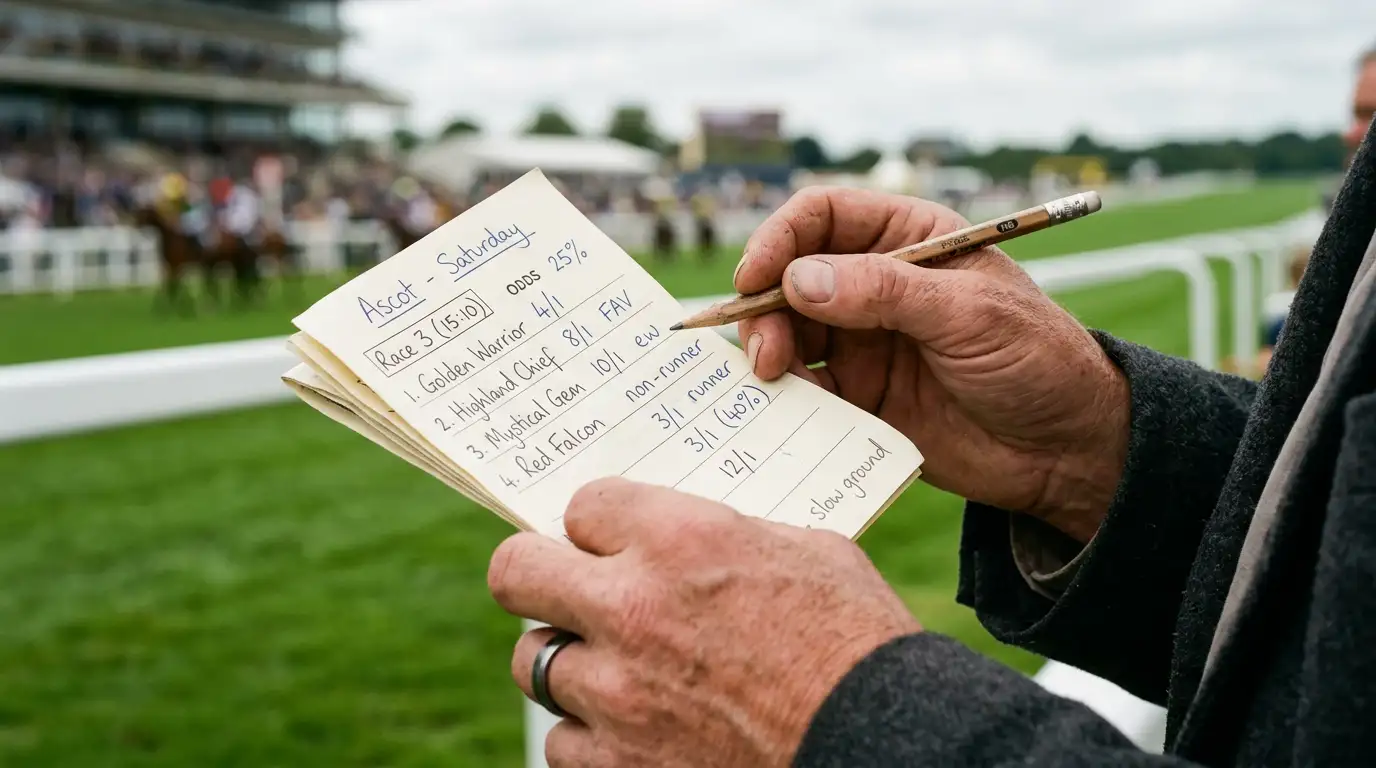
The first in-running bet I ever struck was at Doncaster on a Saturday afternoon. A horse I’d assessed as the second-best runner in the race had drifted to the back of the field in the early stages, and the in-play exchange price had ballooned out to 12.0. Two furlongs from home it was back in midfield. I never had time to type the lay stake I’d planned. By the time I’d switched windows the price was 5.0 and the moment had gone.
That moment, and a lot of others like it, taught me what in-play horse racing betting actually is. It is the deliberate compression of all the work that conventional punters spread across a week — form study, pace analysis, market reading — into the two to ten minutes that a race actually lasts. Decisions get made in seconds, not hours. The information arrives visually, in real time, and disappears just as quickly. If you can’t process what you’re seeing fast enough to act on it, you’re not betting in-running. You’re contributing your stakes to people who can.
Live Market Movement Analytics
Watch a Betfair in-running market on any decent UK race and you’ll see a kind of organised chaos. Prices on the leaders shorten and then drift as horses make moves and lose ground. Prices on hold-up horses balloon when they look hopeless and crash when they start to travel. Each price change reflects a collective judgement by the watching market about how the race is unfolding.
That judgement is dominated by professional and semi-professional traders who watch races for a living, often with multiple screens, race-card analysis open, and software that lets them place lay or back bets with a single click. They are reading the same race you are, but they are reading it faster, with better tools, and from a position of less emotional attachment to any particular horse. When you bet in-play, you are competing with them for the price.
The market also reacts to predictable visual triggers. A horse winning the early lead and setting a strong pace will see its price shorten regardless of whether the pace is actually sustainable. A favourite slipping back through the field will see its price balloon, sometimes dramatically, before settling as the market realises the horse is still in contention. Reading the market means understanding which moves are real signals and which are short-term reactions that will be corrected within seconds.
Liquidity is patchier in-running than pre-race. Big Saturday races have deep in-play markets where you can move meaningful sums. Midweek midday cards can be illiquid enough that your own bets move the prices noticeably. The market is also paused briefly at start and at certain points during longer races, which creates gaps where you can’t trade at all. Plan around those gaps before the race rather than discovering them mid-race.
Live race reading pairs perfectly with a disciplined back-to-lay trading strategy on the betting exchanges.
Reading running positions
The single most useful skill in in-running betting is the ability to look at the race itself and decide which horses are travelling well and which are working hard. Form study, ratings, and ground analysis all dissolve into this real-time judgement once the gates open.
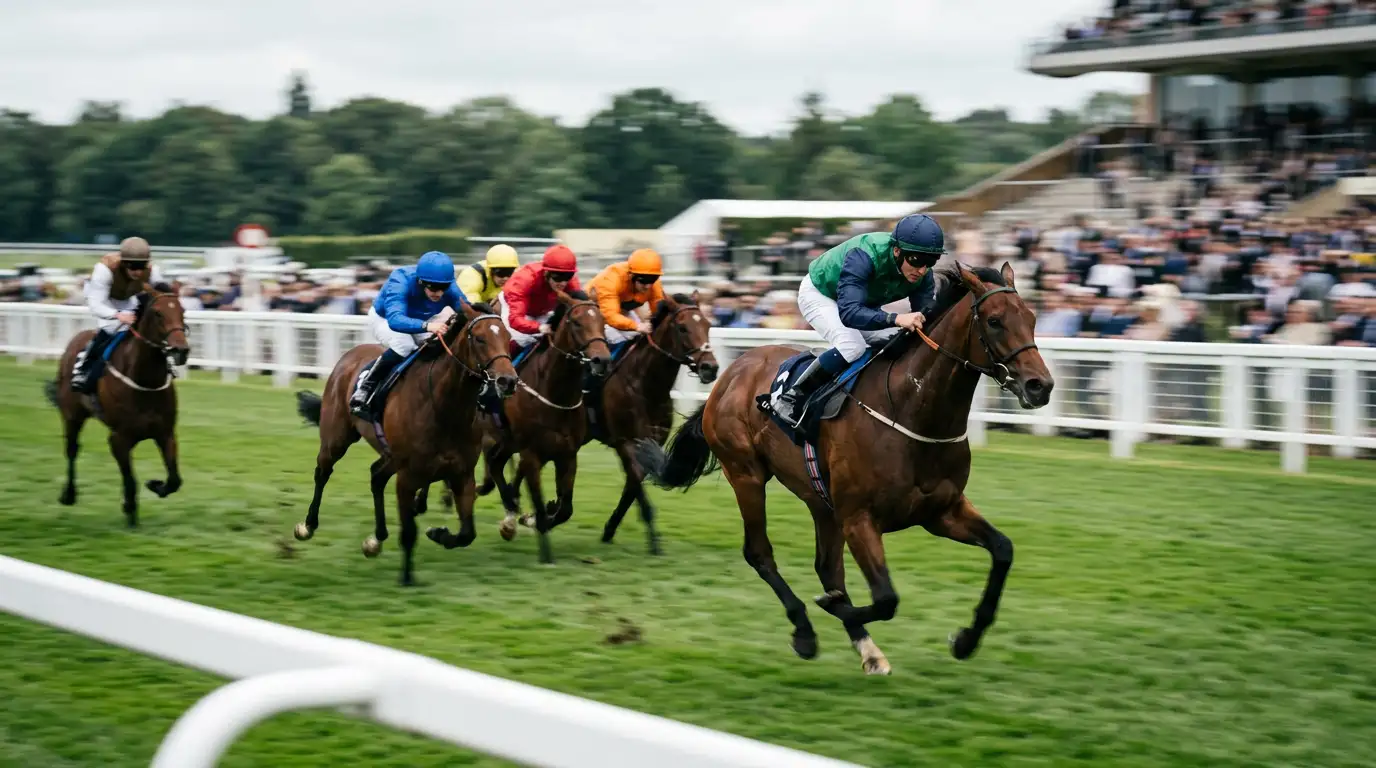
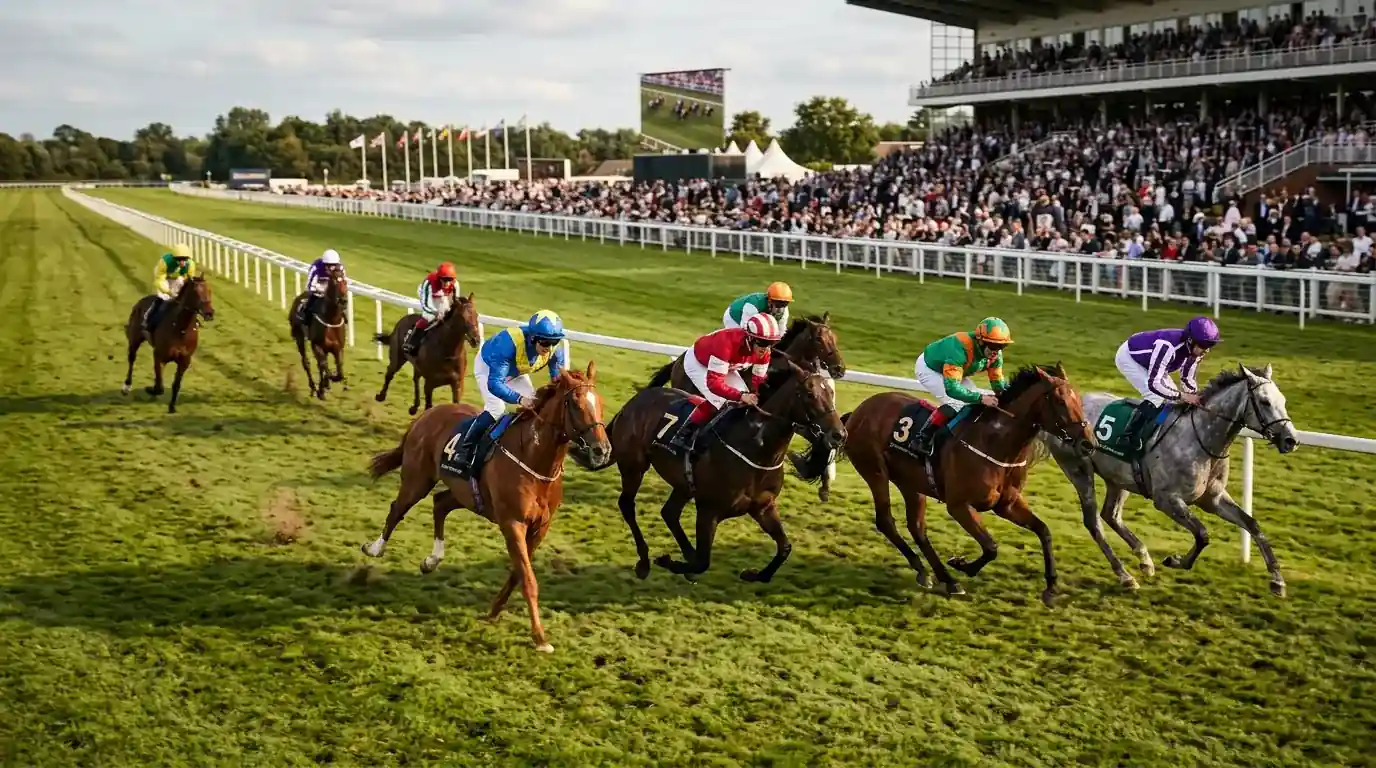
A horse travelling well sits in its position without obvious effort. The jockey looks relaxed. The horse’s stride is fluid and rhythmic. It still has reserves of effort visible. A horse working hard shows the opposite: the jockey is already pushing, the horse’s stride is becoming choppy, and the body language suggests it’s giving everything just to maintain position. The contrast is usually clear if you watch enough racing, but it takes time and reps to read it confidently while a market is moving against you.
The other dimension is positioning relative to the pace. A horse held up at the back of a strongly-run race is often well placed; a horse held up at the back of a slowly-run race is in serious trouble because the leaders will get first run on the home straight. Reading the pace of a race in real time — fast, even, or false — is what separates ordinary in-play punters from those who actually make money at this.
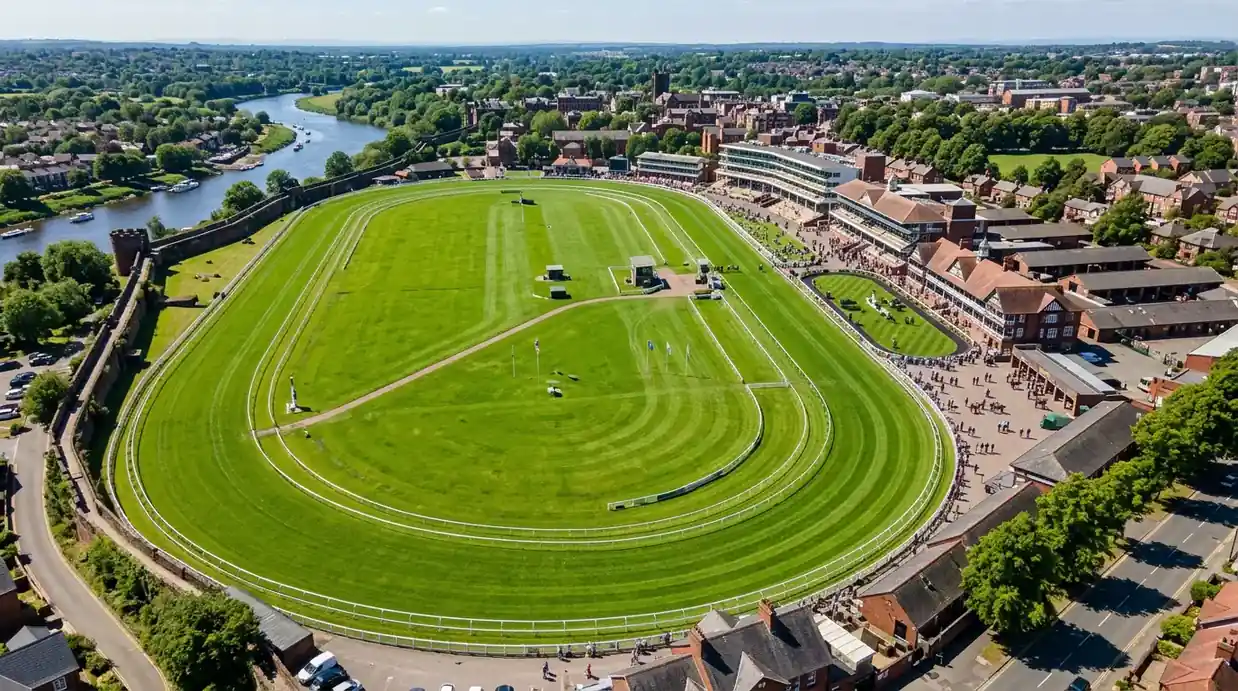
For races where draw position influences how runners can be positioned early, I cover the underlying mechanics in my article on draw bias in horse racing. The draw shapes what positions are even available to a horse in the first part of a race, which feeds directly into what you can expect to see in-running.
Pace and stamina cues that flag a winner early
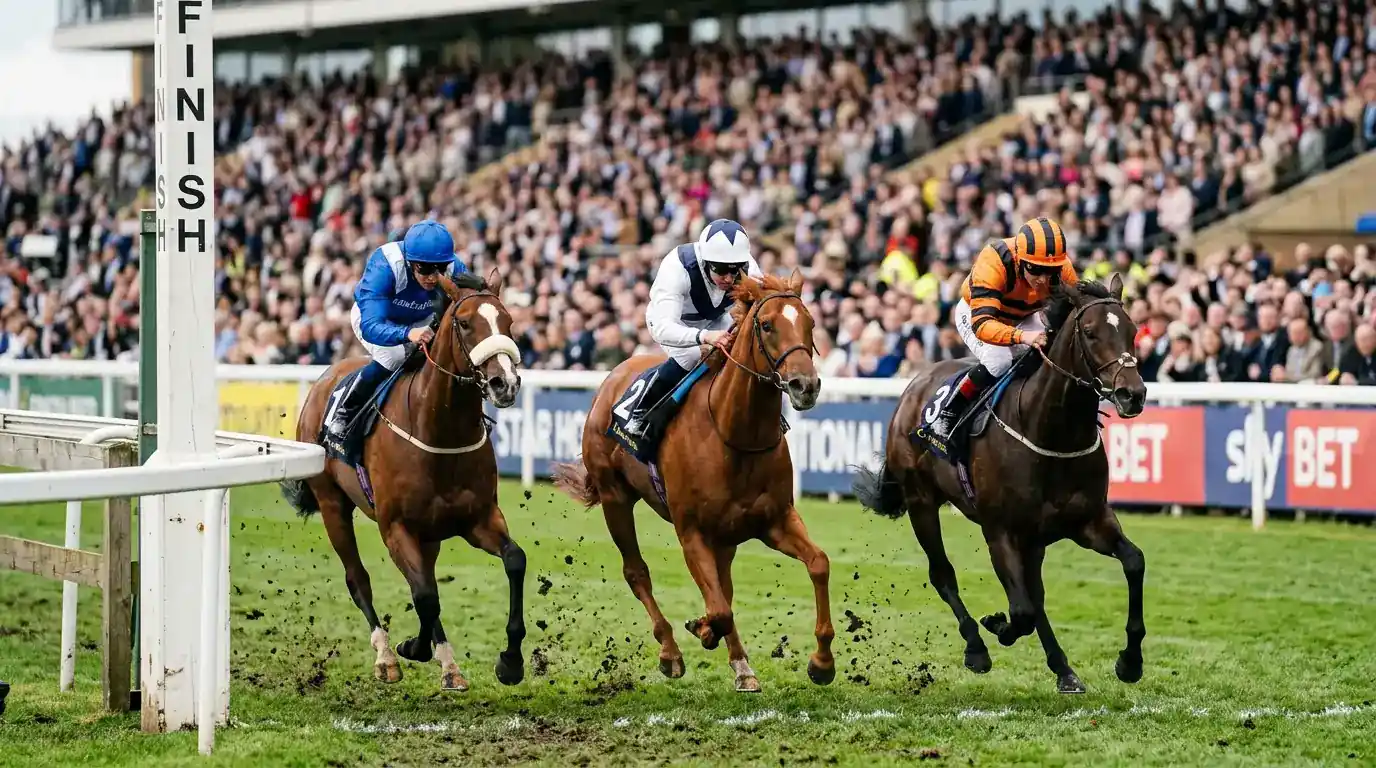
Some signals are reliable enough to act on with high confidence. A horse making smooth progress through the field while others are being asked for an effort is often the winner. A horse that has been niggled along for a furlong before the home turn — given small reminders by the jockey — usually isn’t going to win, because horses that are travelling well don’t need niggling. A jockey reaching for the whip before the final two furlongs is generally a sign of trouble.
On the flat, the home turn is the moment of truth. Horses that travel into the turn comfortably and emerge with their action still smooth tend to finish strongly. Horses that lose position into the turn or that are noticeably working harder than their rivals through it generally don’t recover. The transition through the bend reveals which runners actually have something left.
Over hurdles and fences, jumping efficiency adds another dimension. A horse jumping out to the side, losing lengths at every obstacle, or making mistakes that disrupt rhythm is bleeding ground that can’t easily be recovered. A horse jumping cleanly and efficiently is conserving the energy it’ll need at the end. National Hunt in-running traders watch the jumps as carefully as the running positions, because a jumping error can flip a price by 50% in three seconds.
Stamina cues for longer races are different again. In a four-mile chase like the Grand National — four miles two furlongs, thirty fences, traditionally up to forty runners — the early stages are largely about survival and rhythm. The real reading starts with about a mile to go, when the horses still travelling smoothly emerge as the actual contenders and the rest start to drop away. Reading those races early is mostly a waste of attention. Save your focus for the final mile when the information density spikes.
Latency and execution risk
Here’s the uncomfortable truth that in-running marketing materials rarely mention. The live picture you’re watching is delayed. Different operators, different streaming services, and different terrestrial broadcasts all have different latency. The exchange itself processes prices essentially in real time, fed by people watching feeds that are themselves delayed by anywhere from three to fifteen seconds.
That gap matters enormously. If you’re watching a feed with eight seconds of delay and the in-play market is being driven by traders with four seconds of delay, they will react to events four seconds before you can. By the time you see a horse start to travel powerfully, the price has already moved to reflect that, because the people with less latency are already on it. You are, in a sense, betting against the past — into a market that already knows the future you’re trying to predict.
Professional in-running traders manage this by minimising their own latency. Faster connections, optimised streaming feeds, and sometimes direct trackside data feeds give them a few seconds of advantage. For an average home-bettor, that gap is permanent and unfixable. It doesn’t make in-play betting impossible, but it means competing on speed alone is a losing game.
The workable strategies for the latency-disadvantaged are pre-formed views and patient waiting. If you’ve decided before the race that a particular horse will be a lay if it goes off too fast, or a back if it sits in a specific position with a furlong to go, you don’t need to win the race to find the moment. You have a plan, and you execute the plan when the conditions are met. That’s a meaningfully different game from reactive trading and is far more accessible to part-time punters watching at home.
Which races suit in-play and which to skip
Not all races reward in-running attention. The races that suit it have liquidity, clear running styles, and enough length for visual reading to add value. Sixteen-runner handicaps on Saturdays, big festival races, and competitive listed-level events on the flat all qualify. Liquid markets give you real prices to trade against, and contested fields generate the in-running drama that the market reacts to.
The races to skip are short sprints — five-furlong races finish before you can place a meaningful in-play bet — small-field conditions races where the form gap is too clear for the market to be wrong, and obscure midweek cards where the liquidity is so thin that no in-play position is really tradeable. Two-mile-plus chases offer the most attractive runway for visual reading, because there’s actually time to watch, think, and act.
UK racing puts on more than ten thousand races a year, which sounds like infinite opportunity. In practice, a serious in-play punter might find five to ten genuinely tradeable races a week. The 2025 attendance figure of 5.031 million across UK courses — the first time the sport has cleared five million since 2019 — tells you the underlying audience is huge, but only a slice of that volume produces the conditions where in-play trading actually works. Quality of opportunity matters more than volume. Being patient enough to wait for those races, and disciplined enough not to bet on the rest, is the boring foundation that holds everything else up.
Master every aspect of the sport by exploring the premier UK horse racing betting platform.
What I’d say to someone starting out
The BHA put it well in their parliamentary submissions: one of the appeals of horseracing is that betting on the sport can almost be considered as a skill, enjoyed by many as an intellectual challenge. In-play betting is the purest expression of that idea, where the skill component is laid bare in real time. If you’re new to in-play betting, watch a hundred races without betting on any of them. Track in your head where each horse is at the home turn, where it finishes, and how the in-running prices moved through the race. Notice which visual signals turned out to predict results and which were misleading. Notice how often the leader at the home turn actually wins versus how often it gets caught.
That kind of unhurried observation is the only training that works. There are no shortcuts. The traders making money in-play have done exactly that, often for years, before they started taking serious positions. The illusion that in-play is fast and exciting masks the slow accumulation of pattern recognition that makes the fast decisions possible. Build the foundation first, then start betting small. Fast bets without that foundation are just expensive entertainment.
How much delay is there between the live race and exchange prices?
It varies. Most home streams run with eight to fifteen seconds of latency relative to the trackside event, while exchange prices update in near real time as traders with faster feeds react. Terrestrial broadcasts can lag further still. The practical result is that a casual home punter is always reacting to a market that knows more than they do. Pre-formed views — deciding in advance what conditions would trigger a bet — are the workaround, because they don’t require speed advantage.
Which UK race types are easiest to bet in-running?
Two-mile-plus chases and competitive Saturday flat handicaps with sixteen or more runners give you the most readable race shape and the deepest in-play liquidity. The long distance of chase racing creates time to read body language and travelling motion, and the depth of liquidity in big handicaps means in-play positions are actually tradeable. Short sprints are nearly impossible to trade in-running, and obscure midweek cards lack the market depth to support meaningful stakes.
Should beginners try in-play horse racing betting?
Not as a first activity. Spend time on pre-race exchange betting and on reading form before adding the time pressure of in-running. When you’re ready, watch many races without betting — tracking what visual signals predicted results — until pattern recognition is solid. Only then start with very small stakes on the races that suit in-play reading. The compressed decision-making rewards experience disproportionately.
Created by the ”Betting Strategy for Horse Racing” editorial team.