
Royal Ascot Betting: Class, Trends and Group Race Logic
 Available in US
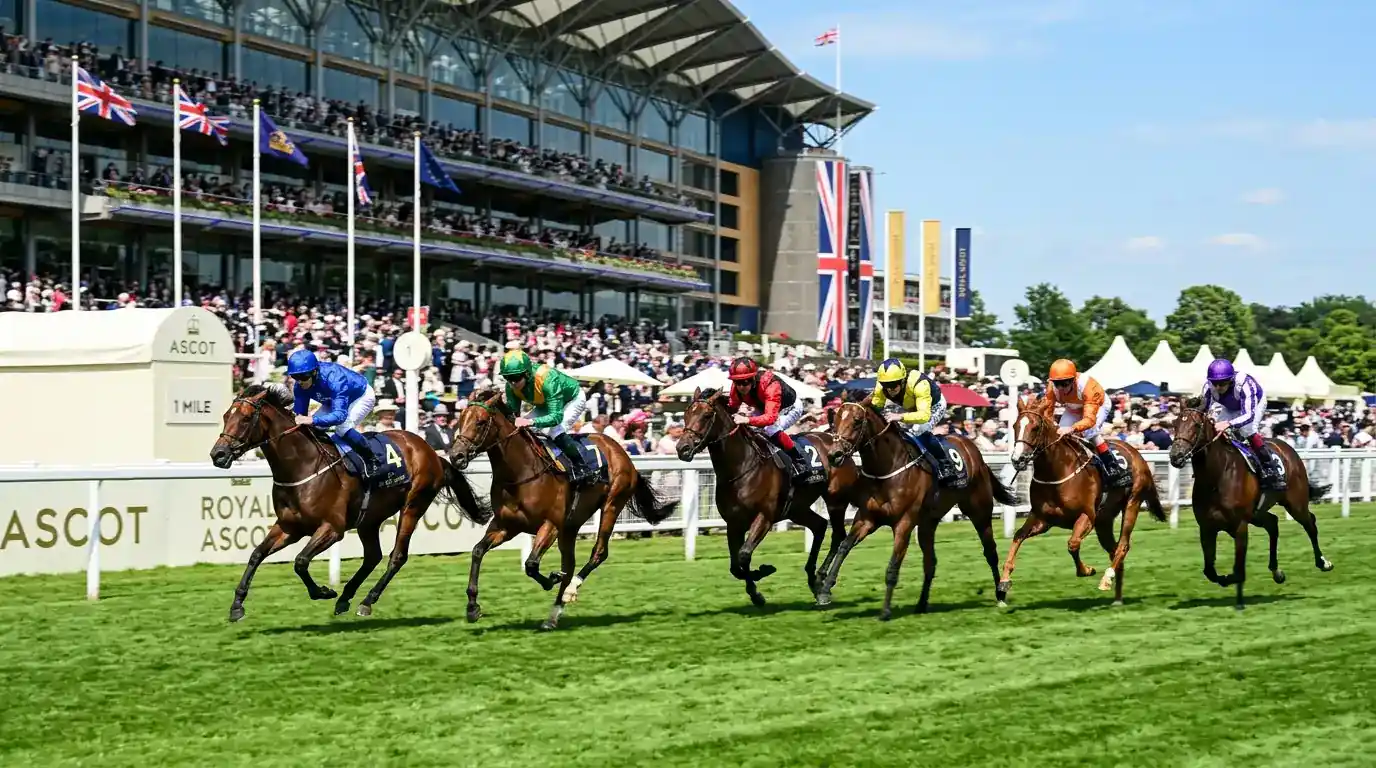
Royal Ascot week is the strangest five days of the UK racing calendar. The prices are tight, the favourites are short, the form on display is the deepest of the year, and the markets are scrutinised by everyone in the betting industry. And yet, somehow, every June produces a stream of large-priced winners, eye-catching defeats, and surprises that defy the patterns the racing press was confidently predicting on Monday morning. Royal Ascot is the meeting where everyone thinks they understand it, and where almost everyone gets at least some of it wrong.
What separates Royal Ascot from any other UK fixture is the global concentration of talent. Owners and trainers aim horses at the meeting from across Europe, North America, Australia, and increasingly from Japan and Hong Kong. The runners are not just the best the UK has to offer — they’re the best the world has chosen to send for that particular week. The depth of class makes the form analysis qualitatively different. You can no longer assume that the top-rated UK runner is the best in the field. You have to consider that the international raider whose form is harder to read might be the genuine threat.
The structure of the meeting
Royal Ascot runs Tuesday through Saturday in mid-to-late June, with seven races on each day and a programme that includes eight Group 1 races across the week — more top-tier prizes than any other UK meeting hosts. The races range from five-furlong sprints to the two-and-a-half-mile Gold Cup, covering every distance and class spectrum that flat racing offers. The total prize money on offer is enormous: UK racing’s total fund of £194.7 million in 2025 set a record, with Royal Ascot contributing disproportionately to that figure.
The fixture’s status as a state occasion isn’t just window dressing — it shapes how trainers approach the meeting. Some yards prepare specifically for Royal Ascot for months, aiming horses at particular races with elaborate prep schedules. Other yards treat it as a routine summer fixture and field horses without the same buildup. Reading which yard is in which camp matters when evaluating prices, because a horse from a Royal Ascot specialist yard is often coming in fitter and better-targeted than its form alone suggests.
The European Commission’s clearance for the levy reform once described UK racing as having a unique interdependency with betting that goes back over two hundred years, and Royal Ascot is the clearest expression of that history. The meeting traces its origins to 1711 under Queen Anne, and the betting market that has grown alongside it carries the weight of three centuries of accumulated punting tradition. That tradition produces its own ecosystem — newspaper supplements, trade-magazine analysis, dedicated betting previews — which collectively makes the Ascot prices among the most efficient in the calendar.
Trainer and stable trends that actually persist
Some Royal Ascot patterns are genuinely persistent. Particular yards have decades-long records of success at the meeting, often concentrated in specific race types. Aidan O’Brien’s yard has dominated certain Group 1s for years; the Gosden operation has run up impressive records in mile races and middle-distance events; the Stoute yard’s traditional Royal Ascot record in stayer races has been remarkable. These patterns are not random — they reflect the breeding, training, and targeting decisions that specific yards make for the meeting.
The corresponding pattern on the punter’s side is to take trainer trends seriously, particularly when supplemented with horse-level analysis. A horse from a yard with a strong Ascot record in a particular race type, running in that race type, with form that fits the profile, is a meaningfully better proposition than the same form profile from a yard without that history. The trends aren’t shortcuts to picking winners — they’re filters that help separate plausible candidates from less likely ones.
The other persistent pattern is around international raiders. Horses arriving from Australia for the sprint races, from the US for races on firmer ground, from Japan for various targets — these all carry form that’s harder to read against UK runners but that often translates well. The market sometimes underestimates raiders because their form looks foreign and unfamiliar. Sometimes it overestimates them on reputation. Distinguishing genuine raider value from raider hype is one of the harder skills in Royal Ascot betting.
Jockey trends are messier. Top jockeys win at Royal Ascot disproportionately to their general strike rates, but that reflects horse quality more than jockey skill. The point that matters for punters is to give some weight to which horses the top jockeys have chosen, particularly when there’s an apparent mismatch between a jockey’s ride and the market’s assessment of the horse. Jockey commitments are negotiated months in advance for big meetings, and the bookings sometimes signal information that hasn’t yet filtered into prices.
Pace and draw at Ascot
Ascot’s straight track for races up to a mile is famously demanding. The course has a long climb to the line that suits stamina over speed, and horses ridden too aggressively early often pay for it in the closing furlongs. The pace dynamics matter particularly in the sprint races, where the question of which side of the course offers the best ground frequently determines the result.
The draw at Ascot has been a long-running source of debate among punters. Different years have produced different patterns, and the consensus is that the draw matters but in a context-dependent way. The interaction with the going, the field size, and which side of the course is being watered affects which stalls are favoured. Rather than relying on simple “high draw good” or “low draw bad” rules, the better approach is to consult course-specific draw data for the particular race conditions on the day. For deeper coverage of the underlying mechanics, see my work on draw bias in horse racing.
For the round course races over a mile and a half or further, the draw matters much less — the horses have time to find their preferred position regardless of where they start. The pace becomes the dominant factor in these races, with hold-up horses often advantaged by the strong galloping pace that Ascot’s depth of class tends to produce.
Reading the pace shape from the racecard is a skill that pays particular dividends at Royal Ascot. Many of the races have multiple front-running types or multiple hold-up types, and identifying which kind of race will result tells you a lot about which horses are likely to be travelling well at the business end. Casual punters often skip this analysis and back horses based on form figures alone, missing the structural set-up of the race entirely.
Where value tends to hide during the week
The headline runners at Royal Ascot are priced tightly. The big favourite for the Gold Cup, the heavily-fancied two-year-old in the Coventry Stakes, the obvious mare in a feature handicap — these horses attract enormous public attention and their prices reflect deep analysis from the betting industry. Finding meaningful overlay value among them is hard.
Value tends to live elsewhere. The second and third strings in the headline races — horses whose claims are credible but who are talked about less than the obvious favourite — often represent better mathematical bets at the prices on offer. The pattern is consistent across the week: the obvious horses are priced as if their form is fully translated to the meeting; the less obvious horses are priced as if their form might not translate.
Value also hides in the maiden and conditions races, where two-year-olds and lightly-raced horses can produce winners whose talent hadn’t been fully recognised before the meeting. These races are harder to read but reward punters who do their homework on the trainer patterns and pedigree connections. A Ballydoyle two-year-old debuting in a Royal Ascot maiden, even at relatively short prices, has a different profile from a similar horse debuting at a routine summer fixture.
The handicaps at Royal Ascot deserve their own approach. The fields are large, the runners are competitive, and the handicapper has had less time to react to each horse’s most recent run than in routine handicaps later in the season. The result is that the official ratings sometimes lag actual current form by more than usual, and well-handicapped horses occasionally appear at Royal Ascot at prices that wouldn’t be available in a regular Saturday handicap a month later.
Each-way value in the big-field handicaps at Royal Ascot can be particularly attractive. Field sizes of sixteen, eighteen, or even twenty runners trigger generous place terms, and the depth of competition makes places more attainable than win bets even on horses with credible claims. Punters who structure their Ascot week around three or four well-chosen each-way handicap bets, supplemented by selective single bets on Group races where they see clear cases, tend to do better than punters who bet everything as straight wins.
How to approach the whole week
The most common mistake casual punters make is treating each day of Royal Ascot independently and trying to bet across most of the races on each card. This produces a steady leak of money over five days, even when individual selections look reasonable. The class of horses, the depth of analysis being applied by the rest of the market, and the structural overround all combine to make broad-spread betting unprofitable.
A better approach is to identify the races you have the strongest views on across the entire week — perhaps eight to twelve races out of the thirty-five on the card — and concentrate stakes there. Skip races where you have no edge. Accept that some days will pass without a bet. The discipline of waiting for the races where you’ve done real work, rather than betting because Royal Ascot is on, is what separates profitable punters from the enthusiastic majority who lose money politely every June.
The week-long structure also rewards keeping notes through the meeting. Horses who run well but get beaten on Tuesday often go on to win races later in the season. Horses whose performances exceed their form on a particular day suggest improvement that might persist. A notebook through Royal Ascot week — what won, what ran well in defeat, what conditions favoured what types — is one of the most useful tools any flat-racing punter can build. The notes pay off six months later when those horses reappear in handicaps and you remember the Royal Ascot performance that the market has half-forgotten.
Royal Ascot is the apex of the UK flat season. It deserves to be treated with corresponding seriousness — not chased through with random bets, but engaged with as a five-day opportunity for the punter who’s prepared to do the work. The horses showed up. The trainers prepared for months. The least you can do is study the card before clicking confirm.
Which trainers dominate Royal Ascot historically?
Several yards have built decades-long records at the meeting in specific race types — the Ballydoyle operation in Group 1 events, the Gosden yard in mile and middle-distance races, the historic Stoute yard’s record in stayer events. These patterns reflect breeding, training and targeting decisions made specifically for Royal Ascot, not just yard size. Knowing which yards have specialised in which types of races is a useful filter when prices in similar races look ambiguous.
Does draw bias matter in Royal Ascot sprints?
Yes, but in a context-dependent way. Different years and different going produce different patterns, and the side of the course being watered affects which stalls are favoured. Simple ‘high draw good’ or ‘low draw bad’ rules don’t hold consistently. The better approach is to consult course-specific draw data for the particular race conditions on the day rather than relying on general assumptions. For round course races over a mile and a half or further, the draw matters much less than the pace shape.
Where is value most likely during Royal Ascot week?
Value tends to live in the second and third strings of the big races rather than among the heavily-fancied favourites, who are priced as efficiently as any market in the UK. The big-field handicaps with generous each-way terms are another reliable source of value, particularly when the official handicapper hasn’t fully reacted to recent form. Maiden races involving Ballydoyle two-year-olds and similar high-profile debutantes can also offer value if you’ve followed the pre-meeting work the connections have done.
Prepared by the Betting Strategy for Horse Racing editorial staff.