Bookmaker Account Restrictions on Horse Racing: How and Why They Happen
 Available in US

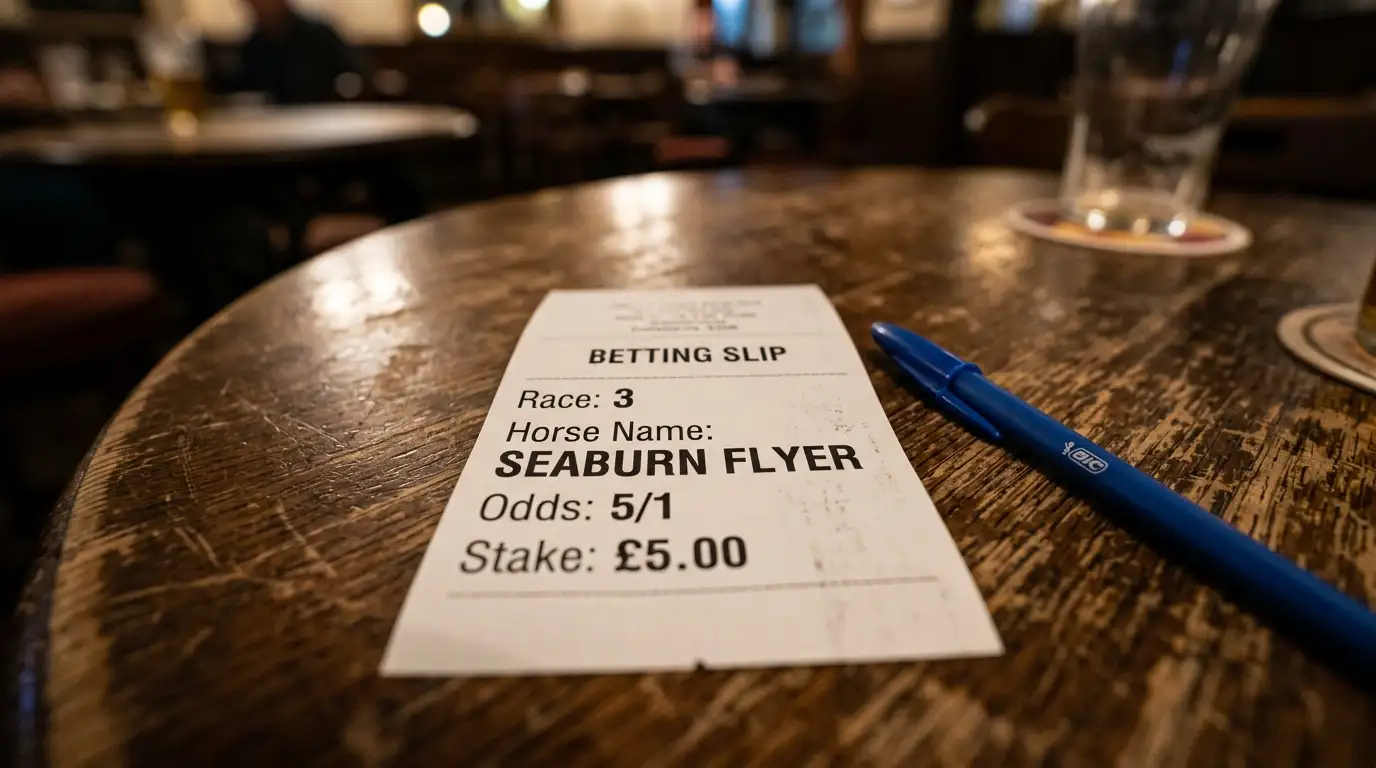
A punter I know once had what he described as the worst Tuesday of his betting life. He logged into his three favourite bookmakers in succession, planning to place a few modest bets across the afternoon’s racing, and discovered that all three had reduced his maximum stake. One had cut him to £5 per bet. Another wouldn’t let him stake more than 50p on any race. The third had closed his account entirely overnight. None of them had sent him a notification, and none of them, when contacted, would give him a specific reason. He hadn’t been doing anything different. The bookmakers had simply decided, on their internal criteria, that he was the kind of customer they didn’t want.
Account restriction — known colloquially as “gubbing” — is the UK bookmaker industry’s standard response to customers identified as systematic winners or as displaying betting patterns that the operators don’t want to support. The practice is legal, widespread, and an essential operational fact of life for any serious UK punter. Understanding how restrictions work, what triggers them, and what alternatives exist when an account becomes restricted is part of the practical reality of UK racing betting in 2026.
What triggers a restriction
Bookmaker restriction systems are automated and pattern-based. The operators run algorithms across their customer base looking for specific behavioural signals associated with profitable customers — the kind of customers whose continued activity would cost the operator money over time. When the algorithms flag an account, the response is typically immediate and unilateral: stake limits get reduced, certain markets become unavailable, and in some cases the account is closed entirely without warning.
The specific triggers vary between operators but several patterns are widely identified. Consistently taking early prices that subsequently shorten is one of the strongest signals — it indicates that the customer is identifying value before the market reacts, which is the textbook profile of a profitable punter. Disproportionate activity on harder-to-price markets (handicaps with large fields, niche meetings, ante-post markets) raises flags because the operator’s pricing on these markets is less robust than on heavily-followed favourites in major races.
Specific bet patterns also trigger restrictions. Frequent use of each-way bets on horses at long prices in large-field handicaps — a known structural angle in UK racing — is a flag that the operator’s algorithms recognise. Following a tipster service whose customers collectively produce winners against the book is enough to restrict the entire tipster’s following base. Even patterns as innocent as consistent attendance at racing fixtures (geolocated through mobile betting) can correlate with serious-punter status.
The threshold for restriction is sometimes surprisingly low. Accounts have been restricted after relatively modest winning periods — a few weeks of consistent profit can be enough for some operators to act. The pattern matters more than the absolute profit; an account that wins steadily over many small bets attracts more attention than an account that wins big once. The operators are looking for systematic edges, not for lucky punters, and systematic patterns are visible in small samples even before large cumulative profits accumulate.
The Betting and Gaming Council’s executive Grainne Hurst has, in the broader regulatory context, described unlicensed offshore operators as parasite operators that don’t pay tax, don’t care about safer gambling, and do not contribute a penny to the levy. The framing matters for restricted punters because the BGC’s commentary draws a sharp distinction between the regulated UK market (where restrictions happen but consumer protections apply) and the unregulated alternative (where neither happens). Punters facing restriction sometimes consider migrating to offshore operators, and the BGC’s positioning highlights the trade-off involved.
The warning signs of an impending gub
Most restrictions don’t arrive without prior signals. Customers paying attention can usually identify the early warning signs and adjust accordingly — though by the time the signals are visible, the operator has often already decided to restrict and the timing is largely a matter of when the algorithm runs.
The first warning sign is bonus restriction. Operators sometimes remove access to promotional offers from accounts they’re flagging — no more free bets, no more enhanced offers, no more BOG protection on certain markets. The promotional restrictions often precede stake restrictions by weeks or months, and customers who notice their promotional access disappearing can take it as a signal that fuller restrictions may follow.
The second warning sign is “manual approval” being applied to bets. Instead of bets matching instantly, they require operator approval before being accepted — sometimes taking minutes, sometimes taking longer. The manual approval process is sometimes a precursor to outright stake limits, and it’s also a way for operators to selectively decline bets they don’t want without explicitly restricting the account.
The third warning sign is reduced stake limits on specific markets while the broader account remains active. An operator might cap your stakes on UK racing while leaving football limits unchanged, particularly if the algorithm has identified your edge as racing-specific. This selective restriction is often a halfway step toward broader account treatment.
The fourth warning sign is requests for additional documentation. Some restrictions are technically dressed as compliance requirements — proof of address, source of funds verification, identity checks beyond what was required at signup. While these requests are legitimate when they’re driven by regulatory requirements, they’re sometimes used as a stalling tactic that effectively restricts the account without explicit restriction terminology.
Accounts that don’t show these warning signs are not necessarily safe, but accounts that do show them are very likely heading for restriction. The operational response is to use those accounts more conservatively while building activity at alternative operators, so that when the restriction arrives the impact is manageable rather than catastrophic.
The exchange as an alternative
The structural alternative to restricted sportsbook accounts is the betting exchange. Betfair, Smarkets, Matchbook and similar venues operate on commission rather than margin, which means they benefit from customer turnover regardless of who wins individual bets. The exchanges don’t restrict winning customers in the way sportsbooks do because their commercial model doesn’t penalise customer profitability.
For serious UK racing punters, the exchange path eventually becomes the operational core. Sportsbook accounts contribute supplementary turnover until they’re restricted; the exchange handles the bulk of long-term activity. The transition isn’t always seamless — exchange liquidity varies by market, commission rates affect net returns, and the operational rhythm differs from sportsbook betting — but it’s the structurally durable path for any punter intending to maintain serious activity over years.
For more on how the exchange actually works at the mechanics level, see my piece on Betfair Exchange basics. The transition from sportsbook-led betting to exchange-led betting is one of the most common operational shifts among UK punters, and understanding the exchange before you need to make the transition produces better outcomes than learning under pressure once your sportsbook accounts have been restricted.
UK horse racing’s £766.7 million in remote gross gambling yield in 2024-25 includes both sportsbook and exchange activity, with the exchange capturing a meaningful share. The market is deep enough that serious turnover on the exchange is genuinely viable, and the alternative to a restricted sportsbook isn’t necessarily reduced betting — it’s redirected betting through a venue that doesn’t restrict winners. The number of licensed gambling activities operating in the UK reached 3,086 by March 2025, a 2.3% decline from 2024, but the exchange model has remained robust as the sportsbook industry has consolidated.
Account management best practice
Several operational habits extend the life of a sportsbook account before restriction. None of them prevents restriction permanently — the algorithms find profitable patterns eventually — but they can extend the useful life of an account from weeks to months or longer.
The first is to spread activity across multiple operators rather than concentrating turnover at one. An account that places three bets per day looks different from one that places thirty, and the operator’s flagging algorithms react to volume signals as well as profit signals. Multiple accounts with modest individual turnover collectively give you the betting volume you want without any single account looking like a serious-punter profile.
The second is to mix bet types in ways that resemble casual customer behaviour. Always backing horses at the longest available price looks like serious punter behaviour. Occasionally including each-way bets, weekend accumulators, or bets on the obvious favourite (even if you have no edge on them) muddles the pattern. The mixing isn’t free — accumulators and favourite-backing typically lose money — but the cost can be modest compared to the value of keeping the account active for longer.
The third is to occasionally back losers deliberately on small stakes. This sounds counterintuitive, but the logic is that algorithms partly classify customers by their hit rate. A customer who only bets on selections they expect to win has a higher hit rate than one who occasionally takes longer-priced flyers. Adding a few small-stake speculative bets to your activity makes the overall hit rate look more like casual behaviour, which delays the algorithm’s flagging.
The fourth is to vary stake sizes. Consistent stake sizes are another signal — serious punters often size positions methodically while casual punters bet whatever feels right. Varying your stakes within a reasonable range, particularly across less-fancied selections, makes the staking pattern look less systematic.
None of these techniques produces a permanent solution. The structural fact is that profitable customers get restricted in the UK sportsbook market. The techniques extend the useful life of accounts and let punters maintain access to BOG, promotional offers, and reasonable stake limits for longer than they otherwise would. The exchange remains the long-term home for serious turnover, but the sportsbook accounts can be productive supplementary venues for the months or years before restriction inevitably arrives.
What restriction actually means for individual punters
The honest answer is that restriction is annoying but not catastrophic. A restricted sportsbook account loses its value as a place to deploy serious stakes, but the betting market overall is large enough that alternative venues exist. The structural alternative — the exchange — provides better prices and better long-term durability anyway. Losing a sportsbook account often pushes punters toward the exchange earlier than they would have moved otherwise, which usually improves their long-run results.
The emotional response to restriction is sometimes disproportionate. Punters who have been profitable enough to attract restriction can feel personally rejected by an operator who, for years, accepted their business and even encouraged it through promotional outreach. The realisation that the relationship was always commercial rather than personal can be uncomfortable. The operators don’t owe customers anything beyond compliance with their terms and conditions, and the terms explicitly reserve the right to restrict at the operator’s discretion.
The other practical consideration is that restriction sometimes follows from completely unrelated factors. Some restrictions result from algorithmic errors, from connection to other accounts (shared device fingerprints, shared addresses), or from compliance flags unrelated to betting profitability. Customers who haven’t been winning sometimes get restricted because the system has mistakenly classified them. Recourse is limited; the operator’s decision is generally final.
For the serious UK racing punter in 2026, the operational reality is that account management is now part of the betting craft. The pattern of restriction is predictable, the alternatives are accessible, and the punters who plan for restriction — by building exchange accounts before they need them, maintaining multiple operator relationships, and avoiding catastrophic concentration at any single venue — handle the transition smoothly when it arrives. The punters who don’t plan, find themselves locked out of their accustomed betting environment with no immediate alternative, and the disruption can be substantial. Foresight is the cheapest defence available.
Is it legal for UK bookmakers to restrict winning accounts?
Yes. UK bookmakers operate under licence terms that explicitly reserve the right to refuse or restrict bets at their discretion, and account restriction is a long-established commercial practice within the regulated market. Customers accept these terms when they open accounts. The Gambling Commission does require operators to handle restrictions fairly under their own terms, but the substantive right to restrict is not in dispute.
What betting patterns trigger account flags fastest?
Consistently taking early prices that subsequently shorten is one of the strongest signals — it indicates value identification before the market reacts. Disproportionate activity on harder-to-price markets, frequent use of structural angles like each-way long-priced runners in large handicaps, and following tipster services whose customers collectively beat the book all raise flags rapidly. The threshold for restriction is sometimes surprisingly low — a few weeks of consistent profit can be enough.
Can a restricted account ever be reopened?
Occasionally, but the path is usually difficult. Some operators review restrictions periodically and may relax them if behaviour patterns change substantially. Others maintain restrictions indefinitely once applied. The realistic operational response to restriction is to treat the account as effectively closed for serious activity and focus on alternative venues — particularly the exchange, where the commercial model doesn’t penalise winning customers in the same way.
Created by the ”Betting Strategy for Horse Racing” editorial team.