Going and Ground Conditions: How Surface Shapes UK Race Results
 Available in US
Every November I have the same conversation with a friend who only bets on three meetings a year. He picks a horse, looks at its last three runs, ignores the going on those runs versus the going on race day, and complains afterwards that “racing makes no sense”. It makes plenty of sense. He’s just betting on horses whose form was built on summer good ground and asking them to perform on autumn heavy. The form figures are accurate. The conditions have changed. The two facts are connected, and the connection lives in the going.
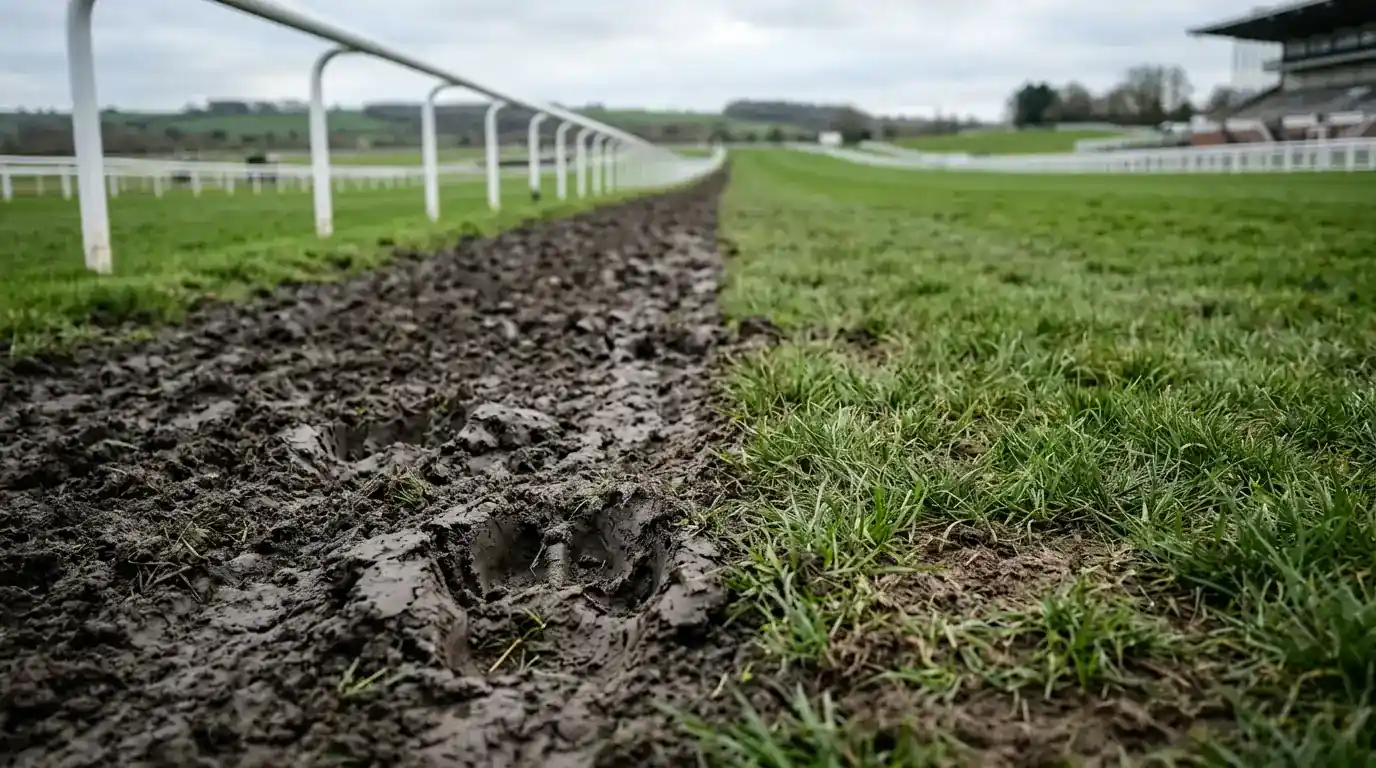
Going is the official description of the state of the track surface, and it determines which horses can physically reproduce their best form on any given day. A horse with brilliant form on good-to-firm at Newmarket may be a moderate runner on heavy at Haydock. A horse who barely placed on quick summer ground might transform on soft autumn ground at the same course. Reading going correctly is one of the most reliable ways to identify horses whose price doesn’t reflect their actual chance on the day.
The going scale in plain English
UK turf going runs through a published scale: hard (rare in modern UK racing, often watered to prevent), firm, good-to-firm, good, good-to-soft, soft, heavy. The clerks of the course assign the going based on a combination of measurement (using a GoingStick instrument that records penetration resistance) and judgement. Each category has practical implications that horses respond to differently.
Firm to good-to-firm conditions favour horses with speed and quick action. Times are fast, finishes are tight, and the ground rewards horses who can lift their feet cleanly without sinking. Many summer flat horses are bred and trained for these conditions; some jumps horses simply cannot run on ground this firm because their action doesn’t suit it.
Good ground is the default — the surface most flat horses can handle. Most form figures across UK summer racing are built on good or thereabouts. It’s the baseline against which other conditions vary, and a horse with no apparent going preference is usually a horse who’s run mostly on good and has been satisfactory there.
Good-to-soft and soft conditions slow the race and reward stamina over speed. The ground gives slightly under the horses’ weight, which means each stride takes more effort and tires runners more quickly. Horses with stamina and economical action thrive; those who need fast ground to use their gears struggle to compete.
Heavy ground is the extreme. The surface is genuinely waterlogged, races are slow, attrition is high, and only horses bred and conditioned for these conditions can really compete. Heavy-ground specialists exist in both codes and form a small subset of the overall population. When the going report on the morning of a race reads “heavy”, the entire form analysis needs to be redone with that in mind.
All-weather courses use a separate scale — typically described as standard, standard-to-slow, or standard-to-fast — that reflects the consistency of the engineered surface. All-weather going varies less day-to-day than turf going does, which is part of why all-weather form is generally cleaner to read.
Reading a horse’s ground preferences
The simplest method is to scan a horse’s recent form by the going under which each run took place. A horse with three wins on soft and four poor runs on good has a clear preference. A horse with mixed results across all going types is probably surface-flexible. A horse whose all wins came on a single going classification is telling you what it prefers; whether that going is on offer today is a separate question.
The complication is that many horses have only a handful of runs to draw conclusions from. With ten or twelve career runs spread across various conditions, you’re rarely going to see enough soft-ground runs to be confident about soft-ground preference. The clue often comes from pedigree: certain stallions are known soft-ground sires, and their progeny tend to handle soft conditions even when the individual horse hasn’t had many opportunities to demonstrate it. Pedigree-aware punters use these signals to make educated guesses about going preferences when the form record is thin.
The opposite case — a horse with established soft-ground form being asked to run on faster ground — is sometimes more reliable to read. A heavy-ground specialist usually shows obvious signs of struggling on fast going: short, ineffective strides, body language suggesting discomfort, and time figures well below what the same horse produces in their preferred conditions. These signals are easier to identify than the inverse.
Trainer comments help when available. Trainers know their horses’ ground preferences intimately and often telegraph them in the racing press. A trainer who says “we’ll wait for some give in the ground” is signalling that the horse needs soft conditions; a trainer who pulls a horse out when the going changes overnight is making a clear statement. Following trainer communications, particularly for horses you bet on regularly, builds context that the form figures alone don’t provide.
For the wider task of reading the racecard correctly and using going as one input among many, see my guide to reading horse racing form. Going is one part of the larger picture, and isolating it from the rest of the racecard misses the interactions that actually decide races.
When weather changes the picture overnight
The most disruptive ground change is the one that happens between Friday evening and Saturday morning. Overnight rain in autumn or winter can shift the going from good-to-soft to soft, or from soft to heavy, in a matter of hours. The racecard published in the Friday papers is suddenly out of date. The morning going report — usually issued by the clerk of the course around 7 or 8am — is the only reliable description of what the runners will actually face.
The market reacts to overnight changes quickly but not always correctly. Prices on horses with established soft-ground form shorten; prices on horses with quicker-ground preferences drift. The pace of repricing means that experienced punters who read the morning report early can sometimes catch prices before the wider market has adjusted. The window is usually short — by mid-morning the market has digested the new conditions — but it exists.
The other thing that happens with overnight rain is non-runner withdrawals. Trainers regularly pull horses out when the going has moved decisively against them. The remaining field is therefore not the field that the original analysis was built on, and the dynamics of the race can shift dramatically. A race that looked like a steady pace with multiple front-runners might become a steady pace with only one obvious leader, or a race with several stamina-flavoured contenders might lose its favourites and leave the door open for a horse you’d dismissed.
The discipline is to redo your analysis when the going changes substantially, not to bolt on a small adjustment to the analysis you already had. A change from good to heavy isn’t a small adjustment — it’s a different race. Treating it as one is a common mistake that costs casual punters serious money in autumn and winter.
Going in flat versus jumps
The going effect is amplified in National Hunt racing for reasons that are partly about distance, partly about jumping. Jumps races are longer (typically two miles to three and a quarter miles), which means the cumulative effect of running on heavy ground is greater. And jumping itself becomes harder on soft surfaces because horses land into ground that gives, lose efficiency at each obstacle, and tire more rapidly than they would on firmer surfaces.
The result is that going matters more in jumps than in flat. A heavy-ground chaser carrying the right weight at the right trip on the right ground can beat a much classier rival who can’t handle the surface. The handicap system rewards this consistency: trainers aim their stout, stamina-heavy horses at winter ground where their advantages compound, and the result is a betting environment where ground preference is one of the dominant variables.
In flat racing, the going effect is real but more variable. Sprinters often have surprisingly wide tolerances because the race is short and the ground doesn’t have time to wear them down. Middle-distance horses are more ground-sensitive because the longer race amplifies any disadvantage. Stayer flat races — the Gold Cup and similar two-mile-plus events — show going effects approaching the jumps level, because the long distance gives the ground time to matter.
The UK racing population in training has been declining at roughly 1.5% annually since 2022, partly because changing economics have pushed some yards to reduce their string sizes. The result is slightly smaller field sizes on average and a slightly thinner pool of going specialists in some niches. Across the full UK calendar of more than ten thousand races spread over 362 days, the heavy-ground horses might only fire at a small fraction of fixtures, so knowing which heavy-ground specialists still race, and which yards still target them at winter fixtures, is a useful piece of niche knowledge that can pay off across a season.
The going factor most punters underweight
If I had to name one factor that the casual UK betting market consistently underprices, it would be going changes that shift the dominant going type from what the form was built on. A horse with brilliant good-ground form racing on soft for the first time often goes off at a price that suggests the form translates cleanly. It usually doesn’t. The market’s reluctance to fully discount form built on different ground is a recurring source of value for punters who do the work.
The corollary is to back going specialists when the conditions arrive that suit them. The horse who’s been running disappointingly on good through August might be transformed on the soft autumn ground in October. The market sometimes shortens these horses but rarely as much as the going switch justifies. Identifying which horses are genuinely going specialists, then waiting for the conditions that activate their best form, is one of the cleaner repeatable strategies in UK racing.
None of this requires sophisticated tools. It requires reading the going report before placing a bet, comparing it to the going under which each runner’s recent form was built, and accepting that horses whose form was built on different conditions are worse propositions than they look. Most casual punters don’t do this. The ones who do, slowly accumulate an edge that compounds across hundreds of bets a year.
How do I read a horse’s ground preferences from past form?
Scan the horse’s recent runs and note the going under which each was contested. Wins or strong placings under a particular going classification, contrasted with poor runs under different conditions, point clearly to a preference. With limited form records, pedigree helps — certain stallions are well-established soft-ground sires whose progeny tend to handle soft conditions. Trainer commentary in racing press also signals preferences directly when available.
What happens to handicaps when ground changes overnight?
The market reprices quickly but not always completely. Horses with established soft-ground form shorten when overnight rain softens the going; quicker-ground specialists drift. Non-runner withdrawals further reshape the field, often removing favourites whose preferred conditions have disappeared. The discipline is to redo your race analysis from scratch when the going has changed substantially, not to bolt small adjustments onto the analysis you already had.
Why do some horses only run on heavy going?
Heavy-ground specialists usually have either the breeding (stout staying bloodlines) or the physique (large, robust frames with deep stamina) or both — characteristics that suit ploughing through testing surfaces but that don’t reward quick action on fast ground. Their connections target winter fixtures and races where heavy going is likely, sometimes leaving the horse idle for months when the ground isn’t right. The pattern reflects deliberate management, not the horse’s overall ability.
Created by the ”Betting Strategy for Horse Racing” editorial team.