Group and Listed Race Betting: Class Hierarchy at the Top of UK Racing
 Available in US

A piece of conventional wisdom in UK racing is that Group races are where the favourites win and the value lies elsewhere. Like most pieces of conventional wisdom, it’s roughly true in a way that obscures something more interesting. Group races aren’t simple to bet because the favourites win often; they’re simple to bet because the underlying form is exposed and the analytical noise is low. The value is genuinely scarcer than in handicaps, but the punters who specialise in Group racing develop edges that compound across years because the same horses keep reappearing, the same yards keep aiming at the same targets, and the form lines have a clarity that handicap racing rarely matches.
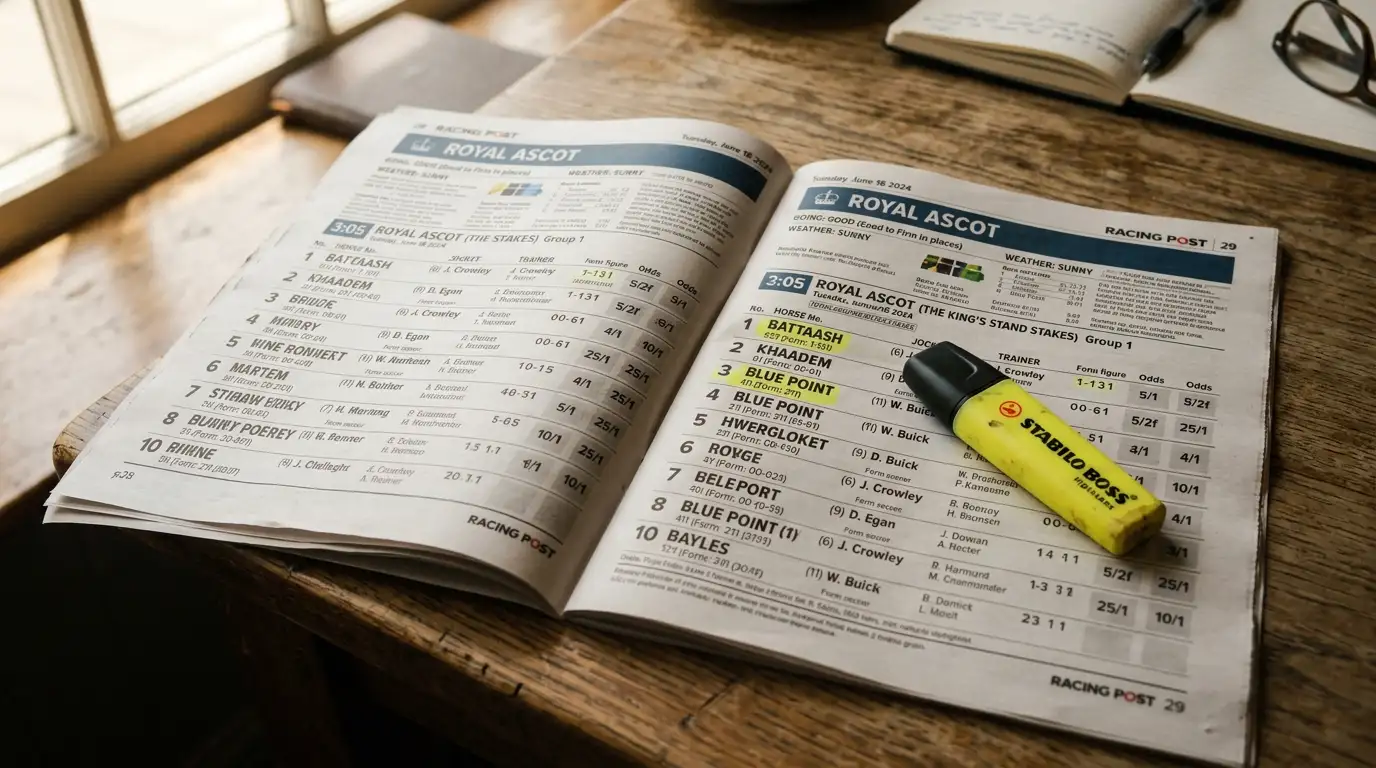
Group and Listed races — collectively called “Pattern races” — are the elite category of UK flat racing. They’re scheduled deliberately to test the best horses against each other under conditions where weight is largely fixed rather than handicap-adjusted, so the result reflects true class rather than the handicapper’s judgement. For punters, this changes everything about how to read the form. The skill isn’t finding the well-handicapped horse; it’s identifying which classy horse will produce its best on the day.
How Pattern races are classified
The Pattern is a four-tier classification covering UK and international elite flat racing. Group 1 races are the top tier — the Derby, the Oaks, the King George, the Champion Stakes, the Sussex Stakes, the Coronation Cup among others. Group 2 races sit one tier below: high-quality events that often serve as trials for Group 1 targets. Group 3 races are the next tier, often hosting horses on the way up or down from Group 1 standard. Listed races are the entry level of the Pattern, hosting horses who’ve outgrown handicaps but aren’t yet competitive in Group company.
The classification system standardises quality across the European racing programme. A Group 2 race in the UK is, in theory, comparable in quality to a Group 2 race in France or Ireland. The system isn’t perfect — local conditions vary, fields vary, and weight conditions differ — but the framework gives punters a consistent way to compare horses whose form was built in different countries. For Royal Ascot week and similar fixtures where international raiders converge, this comparability becomes essential.
The weight conditions in Pattern races are deliberately structured to minimise handicap effects. Group races typically use age and sex allowances rather than ability-based handicap weights: a three-year-old colt carries one weight, a four-year-old filly carries another, but the weights don’t shift to reflect each horse’s specific rating. This means the result reflects true class, not handicapper compensation, and the analytical task becomes finding the best horse on the day rather than the best-handicapped horse.
UK flat racing’s total prize money reached a record £194.7 million in 2025, and the bulk of that money is concentrated in the Pattern races. The Derby, the King George, the Champion Stakes, and the major Royal Ascot Group 1s collectively pay out millions in prize money each, which attracts the best owners, the best trainers, and the best horses internationally. The depth of competition at the top of the Pattern is genuinely the highest the sport offers.
Class progression signals to watch
The single most valuable analytical skill in Pattern race betting is reading class progression — identifying horses moving up through the levels who haven’t yet been fully tested at the new level. A horse stepping up from a successful Listed campaign to Group 3 for the first time is making a class progression that may or may not work; the market prices this uncertainty, and finding cases where the price overestimates the difficulty is where Group-race value lives.
The reliable signals come from form. A horse winning Listed races by widening margins, with reserves of effort visible at the line, is producing form that often translates upward. The horse is racing at a level it has clearly outgrown, and the next step up is likely to be appropriate. Conversely, a horse just hanging on to win at Listed level, beating the same modest opposition repeatedly, is showing form that won’t necessarily survive the higher level of competition in Group 3.
Trainer commentary helps too. Yards typically signal their intentions about class progression — comments like “we’ll see how she handles the step up” indicate genuine uncertainty about the move, while “ready for the Group race” indicates confidence. Reading these signals across the racing press tells you which class-progression moves are being made cautiously and which are being made aggressively.
The breeding dimension matters at the top end. Some bloodlines consistently produce Group performers; others produce useful Listed-level horses but not Group winners. A class-progression candidate from a strong Group-producing family is statistically more likely to handle the move than the same form profile from a Listed-quality family. Pedigree analysis, which I cover for maidens in a separate piece, becomes relevant again at the Pattern level for similar reasons.
The reverse signal — horses moving down the Pattern after losing form — produces some of the best value at the lower levels. A horse who won Group 2s last year but has been running below par at Group 1 level this season, dropping back to Group 2 to find easier opposition, often represents better value at the lower level than horses moving up from below. The market sometimes prices these horses on their recent Group 1 form (poor) rather than on their previous Group 2 form (excellent), and the gap can be meaningful.
The international dimension
UK Group racing now operates as part of a globally connected market. Horses arrive from Ireland for almost every major UK Group race, from France for specific targets, from the United States for races over firmer ground, and increasingly from Japan, Hong Kong, and Australia for the biggest events. Each international racing programme produces its own form lines, and reading those form lines correctly against UK form is a skill in itself.
Irish form is the most digestible because the racing programmes are tightly integrated and the same horses race in both jurisdictions regularly — a Group 2 winner in Ireland is essentially equivalent to a Group 2 winner in the UK. French form requires more interpretation; Japanese and Hong Kong raiders carry the heaviest interpretation burden, with home form built in different conditions and unpredictable international travel effects.
The best approach for casual UK punters is to be cautious about international raiders on first start in Britain. Some adapt perfectly to UK conditions; others underperform their reputation by a margin that makes them poor value at short prices. Second or third UK starts often produce more reliable form, after the horse has demonstrated whether it travels well, handles British ground, and copes with the slightly different race pace.
For broader strategic context on how Group racing fits within the UK flat season, see my piece on flat racing betting strategy. Group racing is the apex of the flat code, and reading it well requires the full context of how the flat season is structured.
Value in Group versus handicap
The honest answer about value at Pattern level is that it’s scarcer than in handicaps, but the value that does exist is more reliable. Handicap races produce frequent surprises because of the structural compression of weights and the variance inherent in large fields. Group races produce fewer surprises but more dependable winning patterns, because the form lines are clearer and the class hierarchy is more stable.
The implication is that Group race betting rewards a different approach. In handicaps, you’re looking for the well-handicapped horse priced at 10/1 or 12/1, accepting a lower strike rate in exchange for occasional big winners. In Group races, you’re looking for the credibly classy horse priced at 4/1 or 5/1, accepting a smaller potential payout in exchange for a higher strike rate and more predictable results. The risk-return profile is genuinely different.
The other Pattern-race value pattern is in races where the obvious favourite is overrated by reputation. Horses with celebrated Group 1 wins from previous seasons often carry a market premium that exceeds their current form. A horse who won the Derby last year but has been disappointing this season might still be priced as a Group 1 favourite based on the historical reputation, even when current form suggests a meaningfully shorter-than-warranted price. Recognising the gap between past glory and current form is one of the more reliable Pattern-race edges.
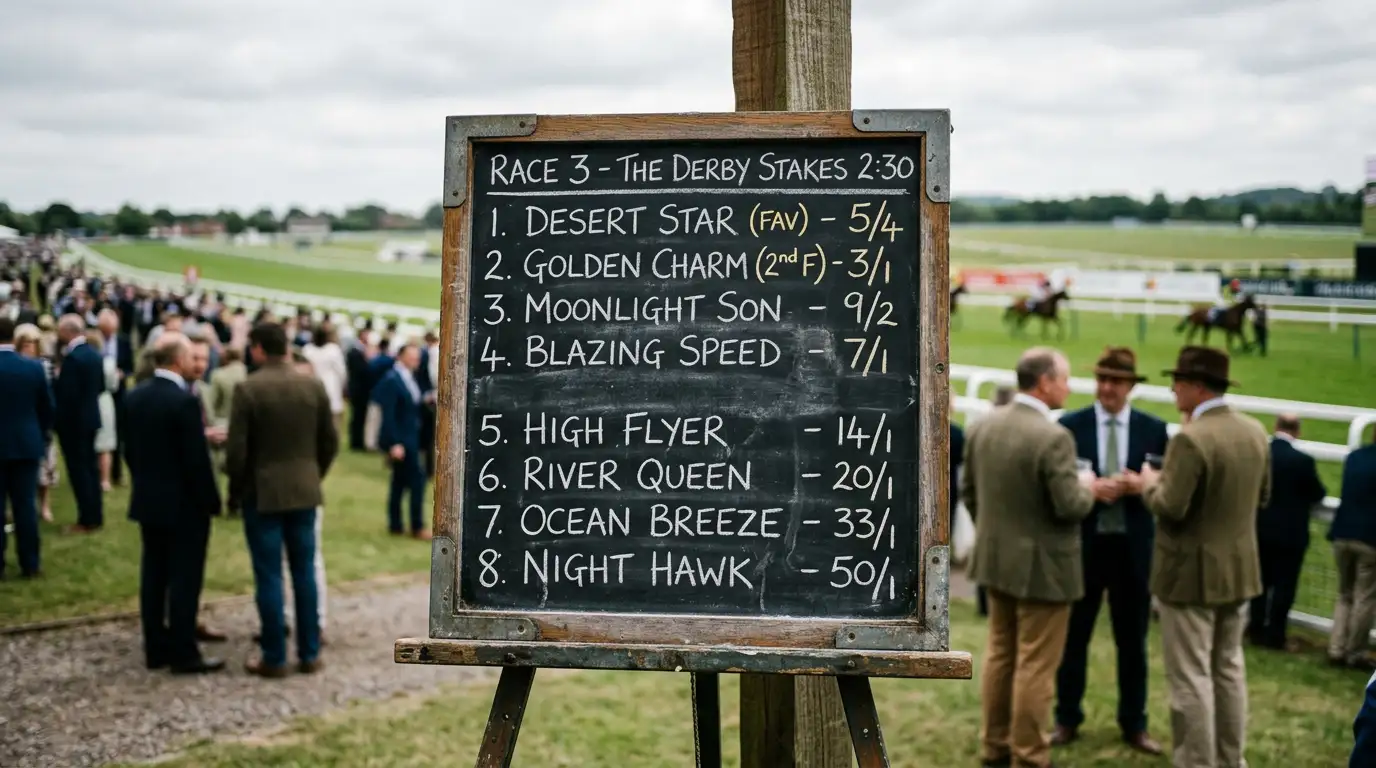
The corollary is that Group race favourites lose more often than the casual punter assumes. In Group 1 racing, the top three in the market account for roughly 70% of winners — high by handicap standards, but still leaving 30% of races to longer-priced runners. Identifying which 30% of races will produce a surprise, rather than blindly backing favourites, is where the analytical work pays.
What the casual market gets wrong about Pattern racing
The most common mistake is backing the heavily-fancied Group 1 favourite without checking whether the horse has run recently at the trip and ground that day’s race actually offers. A Group 1 favourite who won impressively at a mile and a half on good ground last time may be a different proposition over a mile and two furlongs on heavy ground this time. The class of horse is the same; the conditions for showing that class have changed materially, and the price doesn’t always reflect the change.
The second mistake is over-reacting to reputation. The Pattern programme produces some genuinely great horses and some merely good horses with brilliantly-marketed connections. A horse with three Group 1 wins from twelve attempts is top-class; a horse with one Group 1 win from twelve attempts is a less consistent performer than the connections might suggest. The market sometimes prices on the highlights rather than the body of work.
The third mistake is treating each Group race in isolation. The Pattern programme is a connected web of trials, prep races, and championship targets. A horse running disappointingly in a Group 3 in April might be using the race as preparation for a Group 1 target in June. Reading the trainer’s wider campaign for each horse, rather than just the immediate result, produces a different picture of where value lies.
The reward of Pattern-race specialism
Punters who specialise in Pattern racing develop edges that compound. The same horses appear in race after race over a season, the same trainers aim at the same targets year after year, and the same value patterns emerge in similar races. The specialist who watches the trials in March, follows the build-up through April and May, and arrives at the major meetings with months of context can read prices that casual punters can’t.
The other reward is that Pattern racing produces useful results across multiple seasons. A Group winner this year is likely to return as a Group runner next year. The form lines accumulate. The horses become familiar. The connections become predictable. Punters who track Pattern racing seriously for three or four years build an informational base that recent entrants to the activity simply can’t match. The compounding effect is why specialism, in Pattern racing as in most analytical activities, eventually outperforms generalism.
What is the difference between Group 1, 2, 3 and Listed races?
They form a four-tier hierarchy of elite flat racing quality. Group 1 is the top tier — championship events like the Derby, King George, and Champion Stakes. Group 2 sits below as high-quality events often serving as Group 1 trials. Group 3 races are the next level, frequently hosting horses on the way up or down from Group 1 standard. Listed races are the entry level of the Pattern, for horses who’ve outgrown handicaps but aren’t yet competitive in Group company. The system standardises quality across the European racing programme.
How do international runners affect UK Group race prices?
They introduce form lines that are harder to read against UK form. Irish form translates most cleanly because the racing programmes are tightly integrated; French form requires more interpretation; Japanese and Hong Kong raiders carry the heaviest interpretation burden. The market typically prices international raiders on reputation, which can overshoot or underestimate them. Casual punters are usually best served being cautious about international raiders on first UK appearance — second or third starts produce more reliable form once the horse has demonstrated how it adapts to British conditions.
Is there ever value in backing the favourite in a Group 1?
Sometimes, particularly when the favourite is a genuinely top-class horse priced at 5/2 to 4/1 in a race where the alternatives have visible weaknesses. The mistake is backing favourites by default. Group 1 favourites lose roughly 30% of the time, and identifying which 30% will produce a surprise — usually races where the favourite faces conditions that don’t quite suit, or where a class-progression challenger has been undervalued — is the analytical work that produces sustainable Group-race profit.
Created by the ”Betting Strategy for Horse Racing” editorial team.