Best Odds Guaranteed: A UK Bookmaker Perk Worth Reading Carefully
 Available in US
I had a friend who treated Best Odds Guaranteed as a sort of magic spell. He’d take an early price on every horse he backed, satisfied that he was either getting that price or a better one, and went six months feeling clever about it. Then he checked his account history. The price he’d taken was, on average, almost identical to the eventual starting price. The BOG benefit had paid out on a handful of horses where the SP drifted, and the small price advantages over the rest of the bets had averaged out to roughly zero. The perk was real. The magnitude was a lot less than he’d assumed.
Best Odds Guaranteed is a structural concession by UK bookmakers that promises to pay the higher of two prices: the price you took when you placed the bet, or the official starting price (SP) returned at the off. The mechanics are simple, the value is real but modest, and the limits and exclusions are where most of the operational complexity lives. Punters who use BOG well treat it as a small steady tailwind. Punters who misuse it treat it as a reason to bet more often than they otherwise would, which is exactly what bookmakers want them to do.
How BOG actually pays out
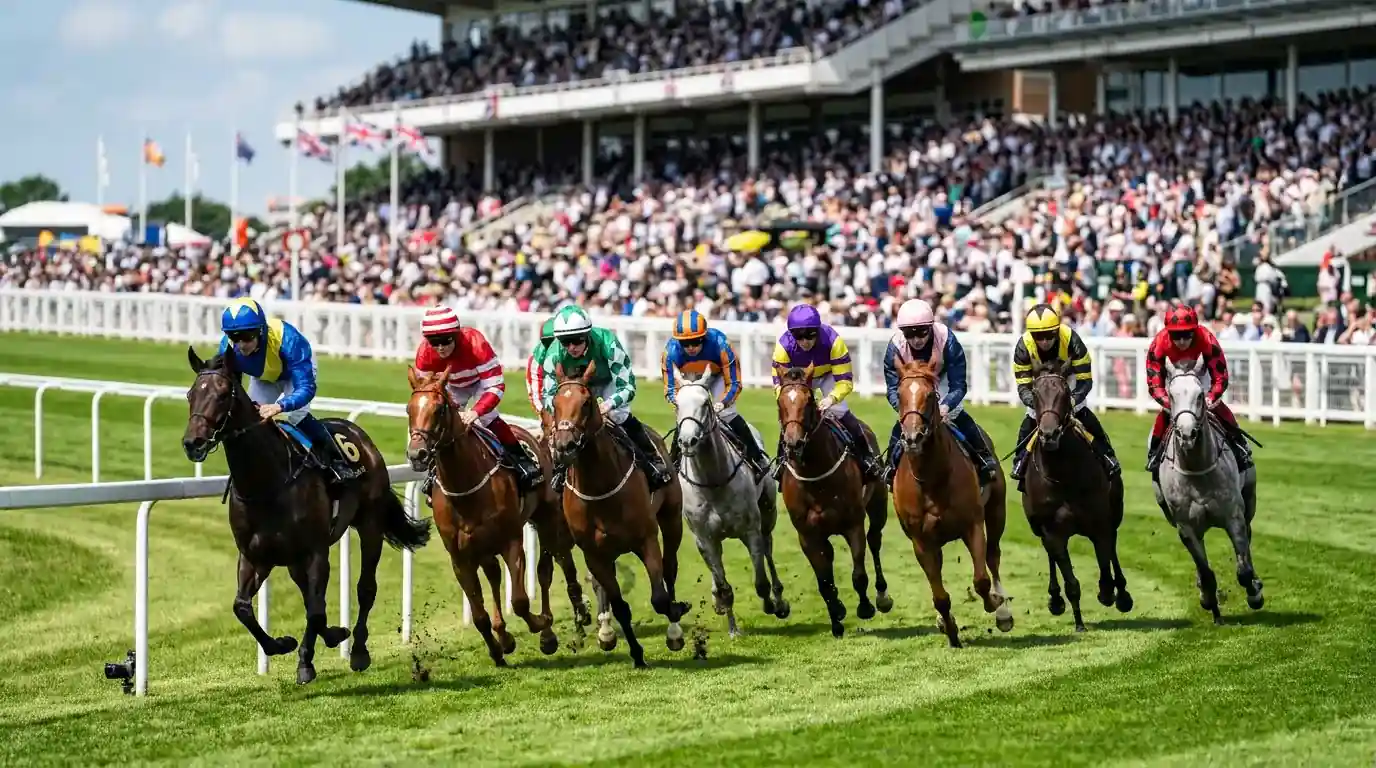
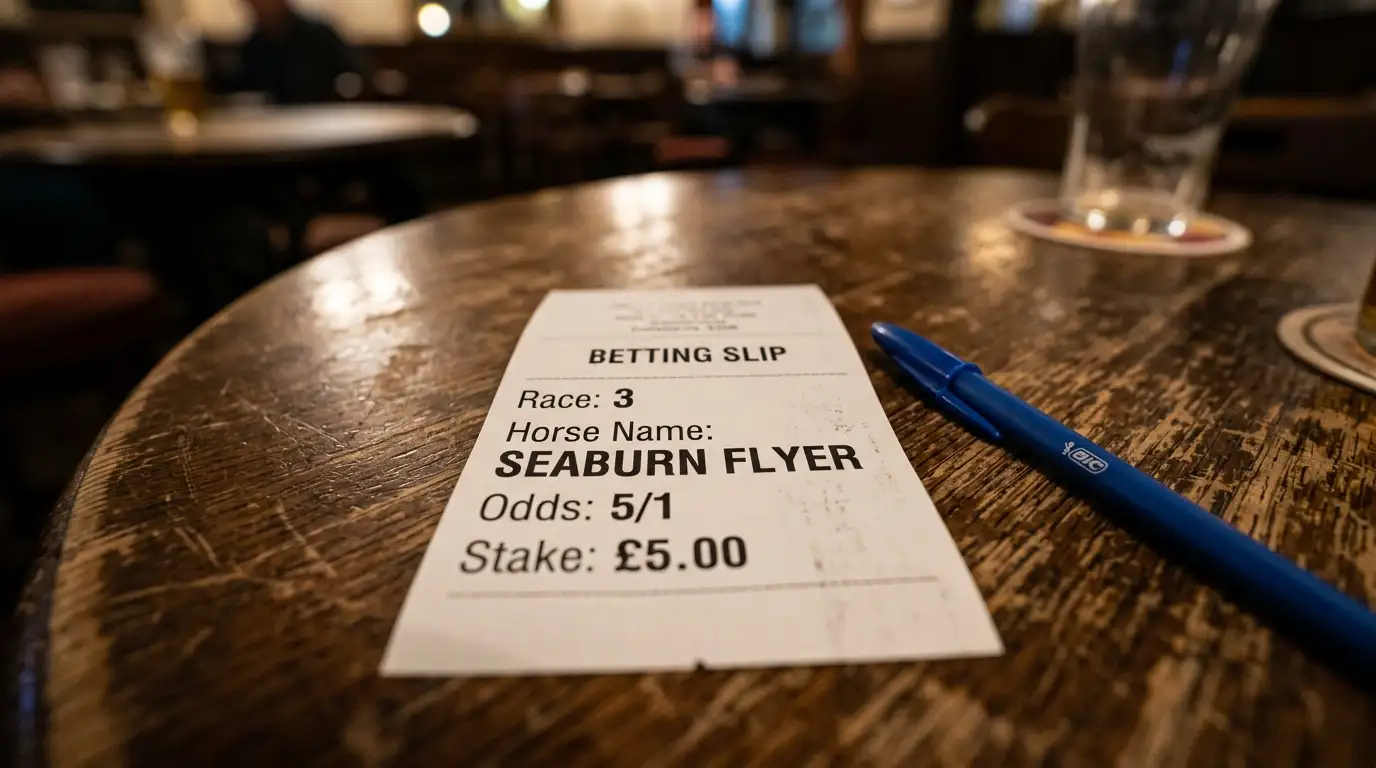
The mechanics work like this. You back a horse at 8/1 on Tuesday evening. By the time the race runs on Wednesday afternoon, the SP is 12/1 — the horse drifted because the market lost confidence. Under BOG, the bookmaker pays you at 12/1 rather than the 8/1 you originally took. Your stake is the same; your return is calculated using the better of the two prices.
The reverse case is what most bets actually look like. You back at 8/1, the SP is 6/1 (the horse shortened), and your bet pays out at 8/1. You took the better number when you backed; BOG doesn’t downgrade you to the SP. The asymmetric outcome — you can never do worse than the original price, sometimes do better — is what creates the value.
The mathematical effect is straightforward to describe. If you take a price and the SP is higher half the time, lower half the time, and the average movement is roughly balanced, BOG gives you the average benefit of the upward moves. In practice, the average benefit across a large sample of bets is small — typically a percent or two of stake — but it’s a positive tailwind that costs the punter nothing to access.
The crucial detail is that BOG only applies to specific bet types and races. The standard configuration is BOG on win and each-way singles for UK and Irish horse racing, on bets struck after a particular time (often around 8am or 9am on race day). The terms vary slightly between operators, but the general shape is the same: BOG covers ordinary horse-racing bets but excludes various more specialised wager types and time windows.
Which UK bookmakers offer BOG
BOG is essentially standard across mainstream UK bookmakers. The major operators all offer it on UK and Irish horse racing as a default for their sign-up customers. The exact terms vary in detail — start times for the offer, maximum stake limits, eligibility for promotional accounts — but the existence of BOG can generally be assumed at any reputable UK-licensed operator.
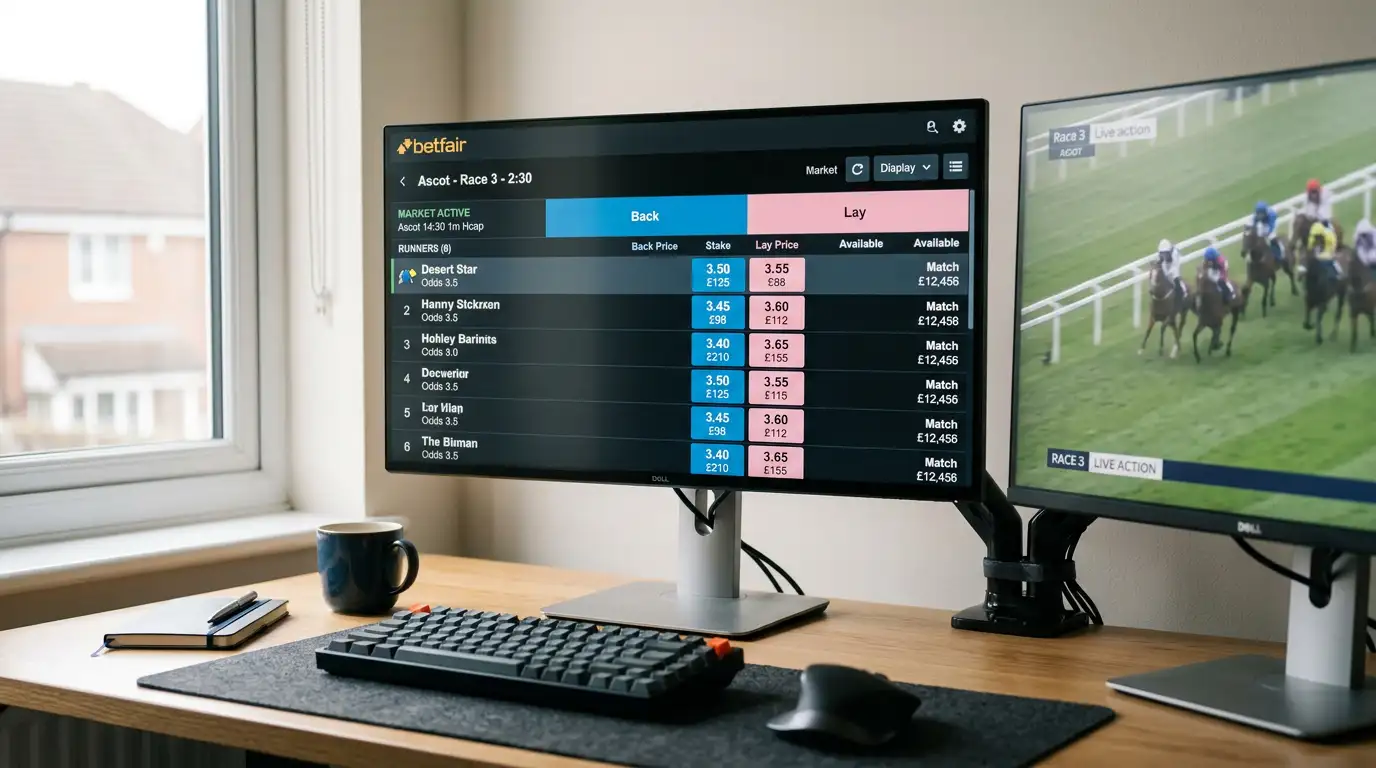
The exception is exchanges, where BOG doesn’t apply because the pricing model is fundamentally different. On an exchange, you take the price available at the moment of matching, and there’s no SP equivalent to compare against (exchanges have a separate BSP — Betfair Starting Price — but it’s not interchangeable with bookmaker SP, and BOG is a sportsbook concept that doesn’t transfer cleanly).
For mainstream race-day sportsbook betting, BOG is the assumed condition rather than a competitive differentiator. The question for punters isn’t “does this bookmaker offer BOG” but “how generous are this bookmaker’s BOG terms” — particularly around maximum stakes, eligibility, and which markets are included. The differences between operators on these specifics are often small but cumulative across many bets.
The total UK remote sports betting yield of £2.6 billion in 2024-25 includes a significant share from horse racing, and the bookmaker competition for that share is fierce. BOG remains one of the standard perks bookmakers use to position themselves as customer-friendly, and the long-term commercial pressure has kept the offer generally stable across the major operators.
The limits and exclusions to watch
The detail that catches punters most often is the maximum stake limit on BOG. Most UK bookmakers cap the BOG concession at a stake level above which it doesn’t apply — sometimes £50, sometimes £100, occasionally higher for specific accounts. Bets larger than the cap still pay out at the original price if it was better than SP, but the BOG protection (paying the higher of price and SP) doesn’t apply to amounts above the cap.
The cap matters more for serious punters than for casual ones. A punter staking £10 per bet is comfortably within any reasonable BOG cap. A punter staking £200 might find that the first £50 or £100 of stake gets BOG protection while the rest reverts to taking the original price only. That detail is worth checking on your specific account, because the bookmaker can configure caps differently for different customers.
Time-window restrictions are the next layer. BOG typically applies only to bets placed after a particular morning time (often the show-up time of the day’s racing) and excludes very early ante-post bets. Bets placed on Tuesday for a Wednesday race might or might not be covered, depending on the bookmaker’s terms. Festival ante-post bets are usually excluded from BOG entirely, though specific extra-place and price promotions during festival weeks sometimes offer different concessions.
The other exclusion to know about is restricted accounts. Bookmakers regularly restrict accounts they believe are systematically winning, and one of the first restrictions imposed is often the removal of BOG protection. Accounts that have been “gubbed” — restricted by the operator — frequently lose access to BOG even before stake limits are imposed. The removal often happens silently, with no notification to the customer, so checking whether BOG is actually being applied on your bets is a habit worth developing.
“BOG-restricted” is shorthand in the betting community for accounts in this category. Once an account is BOG-restricted, the punter has lost most of the long-term advantage of using that operator and is usually better off shifting to a different bookmaker for new bets while keeping the restricted account dormant.
Combining BOG with other offers
BOG stacks reasonably well with other standard race-day promotions. Extra-place offers — where a bookmaker pays each-way on the first four or five rather than the first three — combine with BOG to produce double protection on a single bet: better of price or SP on the win half, and additional place positions on the each-way half. The combination is one of the few situations where the standard concessions genuinely move the maths meaningfully in the punter’s favour.
Free bets and bet credits don’t always qualify for BOG, depending on the operator’s terms. Some bookmakers extend BOG to bonus-funded bets; others restrict it to bets staked with real money. The distinction matters because a free bet at a long price can produce a substantially different payout under BOG than without, and the terms aren’t always clear from the promotional materials.
Saturday morning promotions are where the structural value lives. Bookmakers regularly stack BOG, extra-place offers, and accumulator boosts on the same Saturday card, particularly during festival weeks. Punters using two or three operator accounts for price and promotion comparison routinely improve their realised return by 2% to 5% over a single-account punter — and a significant share of that uplift comes from stacking BOG with the more variable promotional concessions available on big race days.
The trap to avoid is letting promotional bets distort your selection. If you’d only back a horse because the BOG-plus-extra-place offer makes it worth backing, the underlying selection is probably weak and the promotion is doing the heavy lifting. The right way to use promotions is to start from selections you’d back at standard terms and then use the promotions to enhance the bets you were going to make anyway. Reverse engineering selections to fit the promotion is a path to backing horses you shouldn’t be backing.
For the broader structural context of how bookmaker prices are set in the first place and how BOG fits into the wider margin equation, my piece on horse racing odds and market structure covers the overround and pricing mechanics that BOG operates against.
Whether BOG is worth caring about
The honest answer is: yes, but modestly. The long-run benefit across many bets is a small positive tailwind — typically 1–3% on stake — that punters who use it well capture for free. The benefit isn’t a profit centre on its own, but it shaves a meaningful fraction off the bookmaker’s structural advantage, particularly when stacked with other Saturday-morning promotions.
The mistake is thinking BOG is more than this. Punters who take “early prices because BOG” on every bet they make often forget that the early price they’re taking isn’t necessarily better than the SP would have been. BOG protects you from the downside of a drifting SP; it doesn’t tell you that the early price was the right price to take in the first place. If you’d have backed the horse at the SP anyway, BOG is genuine value. If you’re taking an early price purely because BOG exists, you might be making a worse bet that BOG can’t fully fix.
The other thing worth remembering is that BOG is one of the few standard concessions still available to ordinary UK punters. The trend in UK betting has been toward restricted accounts, tighter limits, and reduced promotional access for serious customers. BOG remains relatively generous because it applies to most customers most of the time, and using it on legitimate bets — bets you’d have made anyway — is a small but real contribution to the long-run yield.
Most casual punters don’t think twice about BOG. They take prices, hope for the best, and pocket the occasional bigger payout when an SP drifts. That’s a reasonable approach. The serious punter’s variation is to think about BOG explicitly when timing bets — to take early prices on horses likely to drift, to wait for the SP on horses likely to shorten, and to read the bookmaker’s terms carefully enough to know when BOG actually applies. Those habits compound across hundreds of bets a year into a real if modest edge.
Does BOG apply to ante-post bets?
Usually not. The standard BOG terms across UK bookmakers exclude very early ante-post bets, applying only to bets placed after a specific morning time on race day. Festival ante-post markets are typically excluded entirely. Some bookmakers extend BOG to bets placed within a few days of the race, but the precise window varies by operator. Check the terms before assuming BOG protection applies to any ante-post position.
Are BOG-restricted accounts a real phenomenon?
Yes, and they’re more common than casual punters realise. Bookmakers restrict accounts they believe are winning systematically, and removing BOG protection is often the first restriction applied. The restriction frequently happens silently, with no notification to the customer. Checking whether BOG is actually being applied on your bets — by comparing payouts on bets where the SP exceeded the early price — is a useful habit. Once BOG is gone, most of the structural value of that operator’s account has disappeared.
Is BOG worth using if I only bet at SP?
If you bet purely at SP, BOG is irrelevant — there’s no early price to compare the SP against. The value of BOG comes from taking an early price and being protected if the SP later moves in your favour. Punters who exclusively bet at SP capture none of the BOG benefit and might as well place bets at the most convenient operator regardless of BOG terms. The concession matters specifically for punters who take prices earlier than the off.
Created by the ”Betting Strategy for Horse Racing” editorial team.