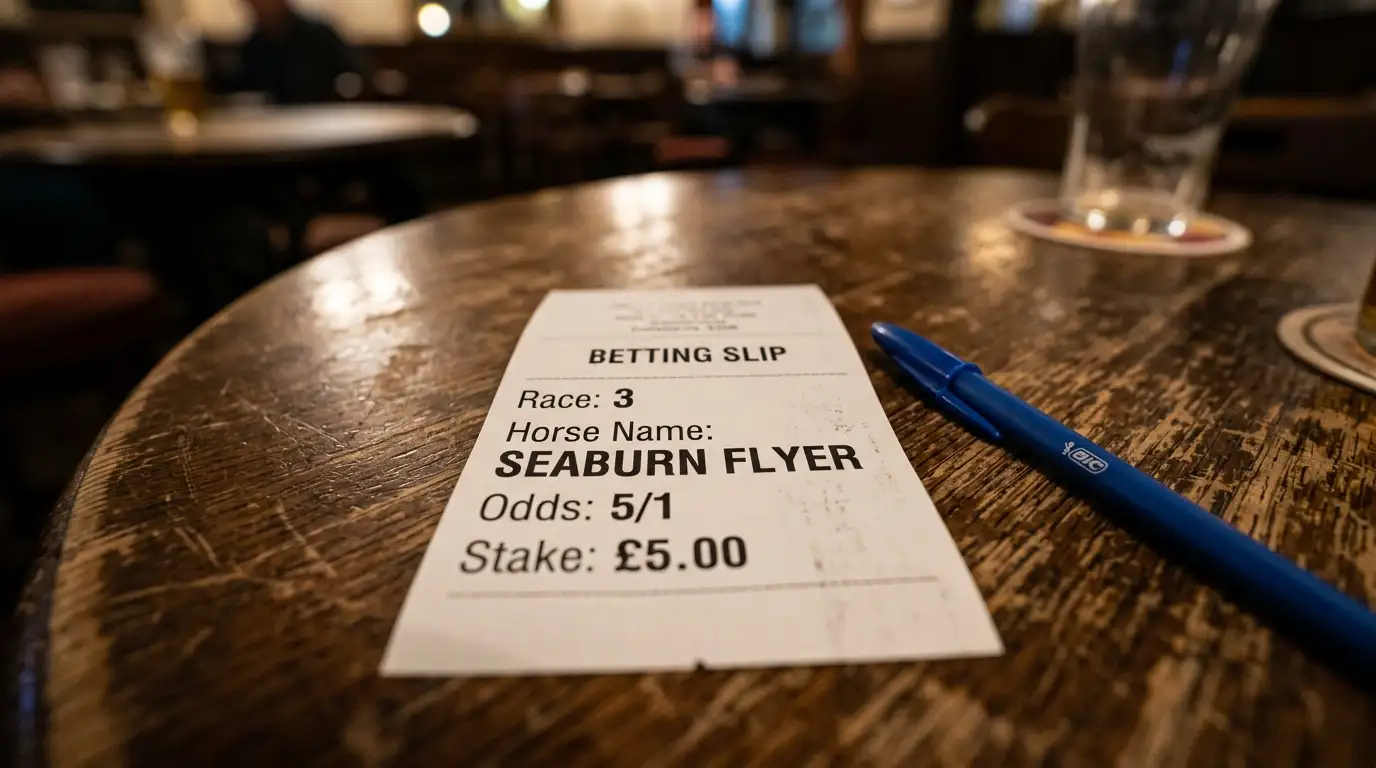
UK Betting Tax and Horse Racing: What Punters Owe (and Don’t)
 Available in US
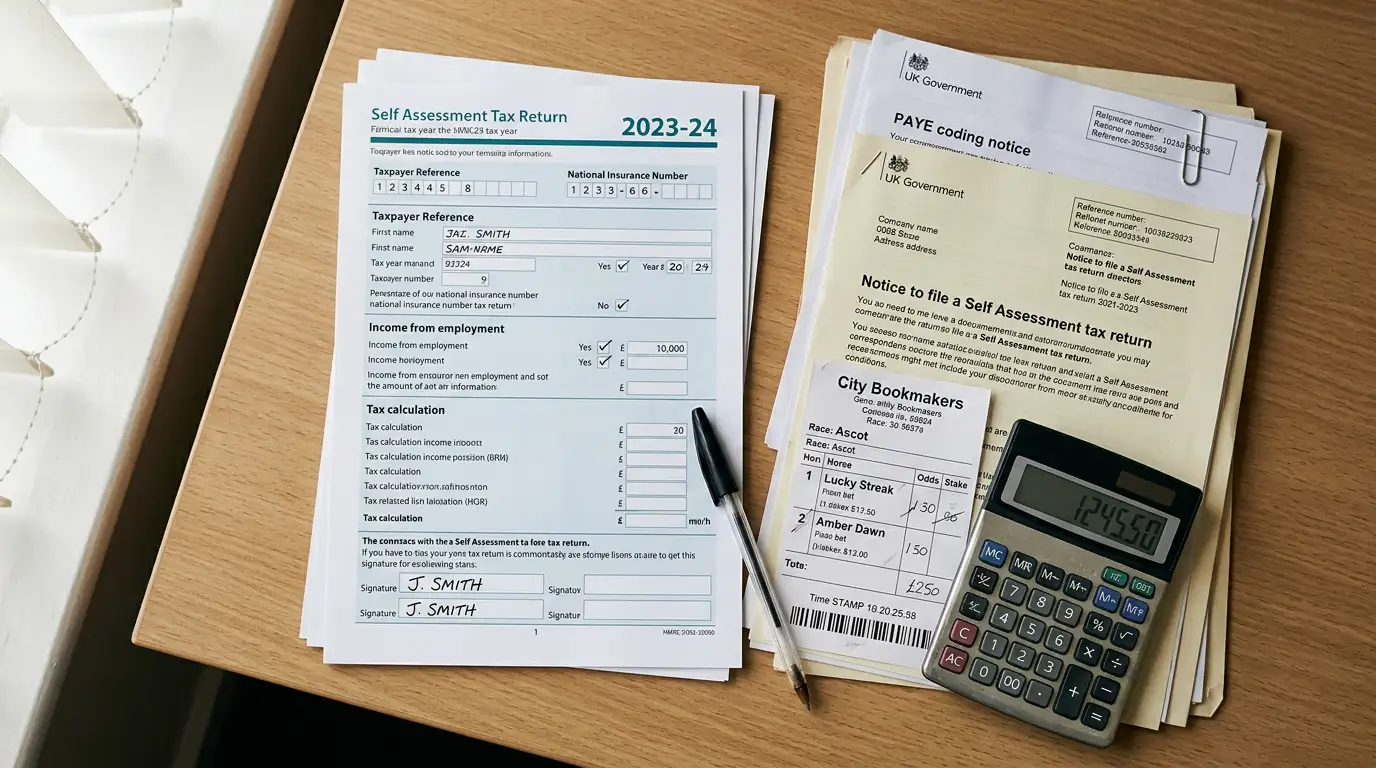
The first time a non-British friend asked me whether I had to pay tax on the horse racing winnings I’d just told him about, I had to take a moment to remember that the answer wasn’t obvious. In the UK, we’ve grown up with the assumption that personal gambling winnings are simply ours to keep, and the regime under which that’s true has been so stable for so long that it barely registers as a feature of the system. Then someone from a country where racing winnings are taxable income at marginal rates asks the question, and you realise the British arrangement is genuinely unusual on the international stage.
UK personal winnings from horse racing betting are not subject to income tax. They are not subject to capital gains tax. They do not appear on a personal tax return. The tax obligation in UK gambling sits entirely with the operator, not the punter, and the consequence is that a successful UK racing punter keeps every pound they win without HMRC taking a share. This arrangement has substantial implications for the economics of professional and semi-professional betting, and for the comparative position of British punters versus their international counterparts.
Personal winnings are not taxed
The legal basis is that gambling winnings are not considered “income” under UK tax law. Income tax applies to income from employment, self-employment, investments, and certain other categories — gambling does not fall within any of these. The treatment dates back to the legislative framework around gambling that has been in place, with various amendments, for decades, and the principle has survived multiple reviews of the tax system.
What this means in practice is that a punter who profits £20,000 over a year of horse racing betting keeps the entire £20,000 with no obligation to declare it to HMRC. The same punter who earned £20,000 through self-employment would be subject to income tax on that amount, plus National Insurance contributions, plus any applicable allowances and reliefs. The contrast between the two treatments is substantial and consistently in favour of the gambling activity.
The exception is when gambling becomes part of a larger commercial enterprise that operates as a business — running a tipster service for payment, operating a betting syndicate where members contribute capital, or any structure where the activity has crossed from personal betting into a commercial venture. In those cases the income from the commercial activity (subscription fees, syndicate management fees) is taxable in the normal way, even though the underlying betting winnings within the activity remain personal and untaxed.
The other exception is professional betting at scale where the activity might be argued to constitute self-employment. HMRC has generally accepted that even professional gamblers operating at high turnover are not “trading” in the tax sense, but the line is occasionally contested. In practice, the overwhelming majority of UK racing punters — including those operating professionally — face no income tax obligation on their winnings.
The arrangement makes professional betting more viable in the UK than in many comparable jurisdictions. A 10% yield on £500,000 of annual turnover producing £50,000 of pre-tax profit is essentially £50,000 of post-tax profit too. In jurisdictions where the same yield would be taxed at marginal income tax rates of 30% or more, the same activity might net only £35,000 — a meaningful difference that affects whether professional betting is economically viable at all.
The operator-side duties that fund the system
While punters pay no tax on winnings, operators face substantial taxation that flows through the regulated market in several streams. Remote Gaming Duty applies to online gambling activity. General Betting Duty applies to traditional betting markets. The horserace betting levy contributes specifically to UK racing.
The levy is the dimension most directly relevant to horse racing. Levy paid by bookmakers on UK racing bets reached a record £108.9 million for the 2024-25 year, up from £105.3 million the previous year. The levy funds prize money, regulatory and veterinary research, and other industry costs that wouldn’t otherwise be sustainable. The HBLB (Horserace Betting Levy Board) directed £66.9 million to prize money in 2024, £19.4 million to regulation, and £2.3 million to veterinary research.
The levy structure means that every legal bet placed on UK racing through a UK-licensed operator contributes — indirectly but materially — to the sport’s economic foundation. Bets placed through unlicensed offshore operators do not. The structural argument for staying within the regulated market goes beyond consumer protection: the regulated market literally sustains the sport that punters are betting on, and migration away from it weakens that sport directly.
The total operator-side tax burden on UK racing-related activity runs into the hundreds of millions of pounds annually across all duties combined. This burden is borne by the operators, not the customers, but it gets factored into the pricing and margin structures the customer encounters. The operators have to recover their tax costs somehow, and the recovery happens through the overround they build into prices and through the commission they charge on the exchange.
The BHA’s contribution to parliamentary evidence on these matters has been substantive. The Authority has noted that in the UK, racing and betting have a unique interdependency that goes back over two hundred years, and that the levy mechanism is the modern expression of that interdependency. The structural argument for maintaining the levy — both in level and in the framework that ensures bookmakers contribute — has been a consistent theme in BHA submissions to government.
The proposed harmonisation and what it could mean
The current betting tax structure differentiates between race-track betting (with its own duty structure) and online casino/slot activity (with a different higher rate). For some years, government has been considering “harmonising” these rates — equalising the tax treatment of different gambling products under a single combined rate. The proposed harmonisation, depending on the specific structure adopted, could substantially affect racing-related betting.
The BHA’s published economic analysis projects severe damage if certain proposed tax changes are implemented in their current form. A BHA spokesperson summarised the case bluntly: implementation in the current form would amount to a loss of £900 million a year to the betting industry, £250 million to British horseracing over the first five years, and £300 million a year in reduced tax yield to the Exchequer. The framing of the impact as a multi-billion-pound combined cost across industry and revenue is what has driven the BHA’s vocal opposition to the proposals as currently shaped.
The mechanism by which harmonisation would damage racing is structural. Online casino gaming generates the highest tax revenue per pound of turnover for the Treasury. Increasing the rate on racing-related betting to match — rather than reducing the casino rate to match racing — would push the cost of racing betting higher for operators, who would either pass it on through tighter prices for punters or absorb it through reduced levy contributions. Either path damages the racing economy.
The numbers extend further. The BHA’s economic analysis also projects 2,752 jobs under threat from the proposed changes, with the £66 million per year first-year impact widening to £330 million over the first five years. The estimates incorporate downstream effects: reduced betting volume leads to reduced levy, which leads to reduced prize money, which makes some training operations unviable, which compounds back into smaller fields and weaker betting interest.
For punters, the practical implication of harmonisation as proposed would be measurably worse prices on UK racing betting, reduced promotional activity from operators absorbing higher costs, and potentially fewer race meetings as the racing economy adjusted to lower funding. None of these outcomes is certain — the proposals could be modified before implementation, or rejected entirely — but the directional pressure is clear if the proposed structure proceeds.
Record-keeping for the punter in a no-tax environment
The absence of personal tax on UK gambling winnings doesn’t eliminate the value of record-keeping. The records matter for other reasons: tracking performance accurately, identifying which strategies work, detecting behavioural drift, and providing documentation if affordability checks require evidence of betting activity. The fact that HMRC doesn’t need the records doesn’t mean the records aren’t useful.
The affordability check regime introduced by the UK Gambling Commission in 2024-25 makes record-keeping more practically relevant than it has historically been. Customers facing enhanced affordability checks may need to demonstrate the source of funds being deposited or the source of winnings being withdrawn. A clean betting log with verified operator statements provides exactly this kind of documentation. The full context of the affordability check regime is in my piece on UK Gambling Commission affordability checks.
Banks and operators sometimes flag unusually large transactions for review. Records that explain the source of the funds — showing the corresponding winnings on the betting account — resolve these reviews quickly. Customers without records face longer review periods and more friction when they want access to their money.
The international comparison
The UK arrangement is distinctive but not unique. Australia treats personal gambling winnings as untaxable in most circumstances. Several European jurisdictions adopt similar approaches. But many countries — including the United States — treat gambling winnings as taxable income, with the corresponding administrative burden of declaring activity and paying tax at marginal rates.
For UK punters considering whether to operate within the regulated market or migrate to offshore operators, the tax dimension reinforces the structural case for staying licensed. The UK tax-free treatment of personal winnings only applies to bets with UK-licensed operators in the normal course. Bets with offshore operators may technically still produce untaxed winnings under UK law, but the operational realities — withdrawal difficulties, transaction blocking by UK banks, lack of dispute mechanisms — often mean that the theoretical tax benefit doesn’t actually translate into accessible funds.
The combination of tax-free winnings plus the consumer protections of the regulated market makes the licensed UK environment uniquely favourable for serious punters compared to most international alternatives. The friction of affordability checks and the inconvenience of restricted accounts are real costs, but they’re costs within a system that ultimately delivers tax-free returns through a legally protected framework. Most punters who have looked at the international alternatives carefully end up concluding that the UK system, despite its friction, remains the most economically attractive environment available.
What the punter needs to know in practical terms
The summary is brief because the regime is, from the punter’s perspective, simple. Winnings from UK horse racing betting are not taxable personal income. You do not declare them. You do not pay tax on them. You keep what you win. The complications around professional gambling, commercial enterprises, and offshore activity affect a small minority of punters; for most, the simple rule applies without qualification.
The wider point is that the tax-free environment is a structural advantage that UK punters often underappreciate. The combination of a deep racing market, a sophisticated regulatory framework, and tax-free personal winnings produces an unusually favourable environment for serious betting activity. The friction that has developed in recent years — affordability checks, account restrictions, evolving regulatory requirements — operates within a fundamentally favourable underlying tax regime that international punters often envy. Recognising what we have, while debating how to address its imperfections, is the more useful frame than treating the friction as evidence of a broken system. The system has features worth defending alongside the features that need reform.
Do I declare horse racing winnings on my UK tax return?
No. Personal gambling winnings, including from UK horse racing, are not subject to income tax or capital gains tax under UK law. They do not appear on a personal tax return. The tax obligation in UK gambling sits entirely with the operator, not the punter. The treatment applies to casual punters and professional bettors alike, with limited exceptions for cases where gambling is part of a commercial enterprise (such as running a tipster service or syndicate management for fee).
How is the horserace betting levy paid and who funds it?
The horserace betting levy is paid by bookmakers on bets placed on UK racing, calculated as a percentage of their gross profits from those bets. The 2024-25 levy reached a record £108.9 million, up from £105.3 million the previous year. The Horserace Betting Levy Board distributes the funds: £66.9 million to prize money in 2024, £19.4 million to regulation, £2.3 million to veterinary research. The levy is the structural mechanism connecting betting activity to racing’s economic foundation.
What does tax harmonisation mean for racing?
The proposed harmonisation would equalise the tax treatment of different gambling products under a single combined rate, potentially raising the rate on race-track betting to match higher rates currently applied to online casino activity. The BHA has projected severe damage from the changes as currently proposed — £66 million per year first-year impact for racing, £330 million over five years, 2,752 jobs at risk. Operators would either pass higher costs to punters through tighter prices or absorb them through reduced levy contributions, with downstream effects on prize money and the racing economy.
Written by the editors at Betting Strategy for Horse Racing.