Grand National Betting: A Race That Breaks the Usual Rules
 Available in US
I once watched a friend back the same horse in seven consecutive Grand Nationals because, in his words, “it’ll come good eventually”. The horse never won. He sometimes brought it up at dinner like a grievance. The truth is that the Grand National at Aintree is the one race in the UK calendar where backing a horse seven years running on the basis of general regard is not even a particularly bad strategy, because almost every other method has flaws too. The race is a unique animal, and any strategy that works in normal racing has to be substantially rethought before it applies here.
Run over four miles and two furlongs, with thirty fences to negotiate, a maximum field traditionally of around thirty-four runners, and a prize fund typically around one million pounds, the Grand National is structurally unlike anything else in the British calendar. The race rewards horses with proven stamina, sound jumping, weight tolerance, and a generous slice of luck. Form lines from ordinary three-mile chases mean less than usual. Recent form means less than usual. Even class means less than usual. What matters is whether a horse can complete the test of Aintree on the first Saturday of April, and that’s not something any other race in the calendar can really tell you.
The race conditions that change everything
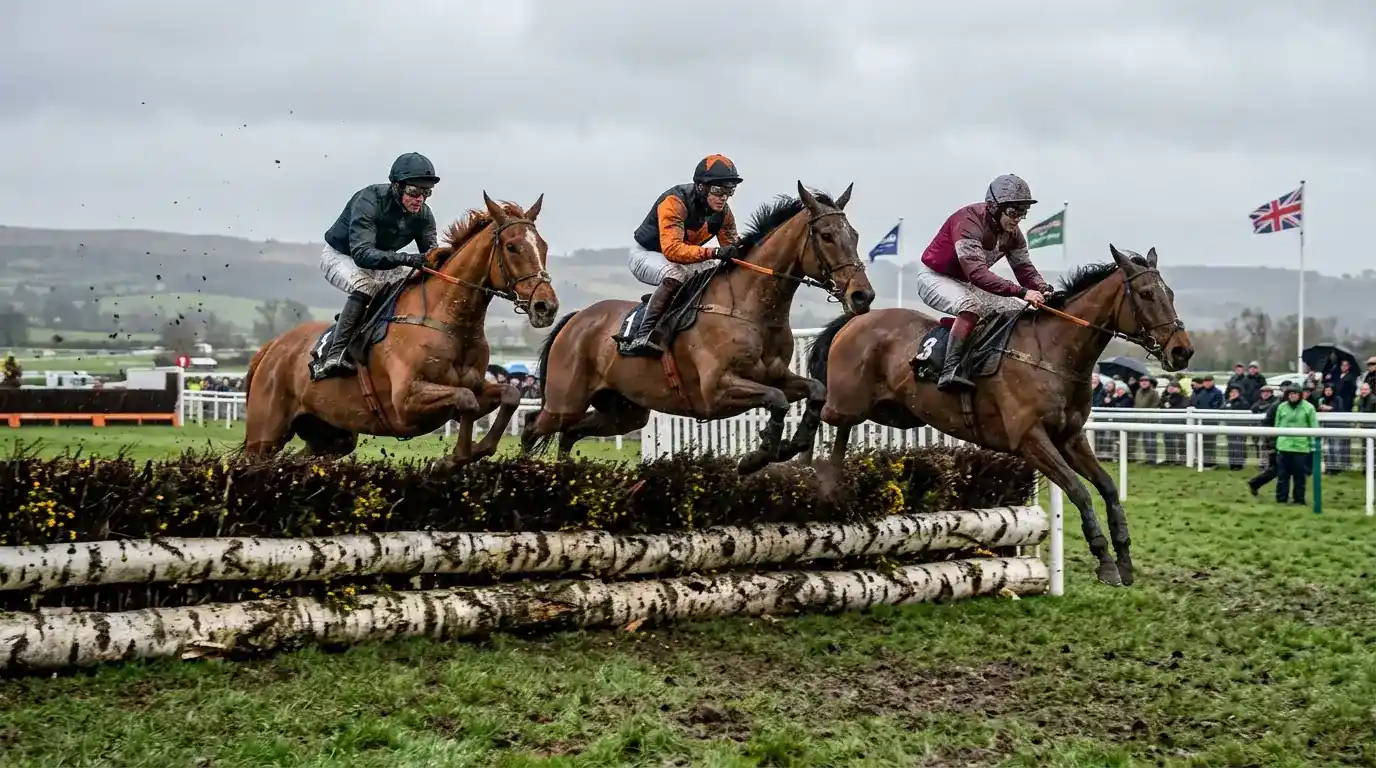
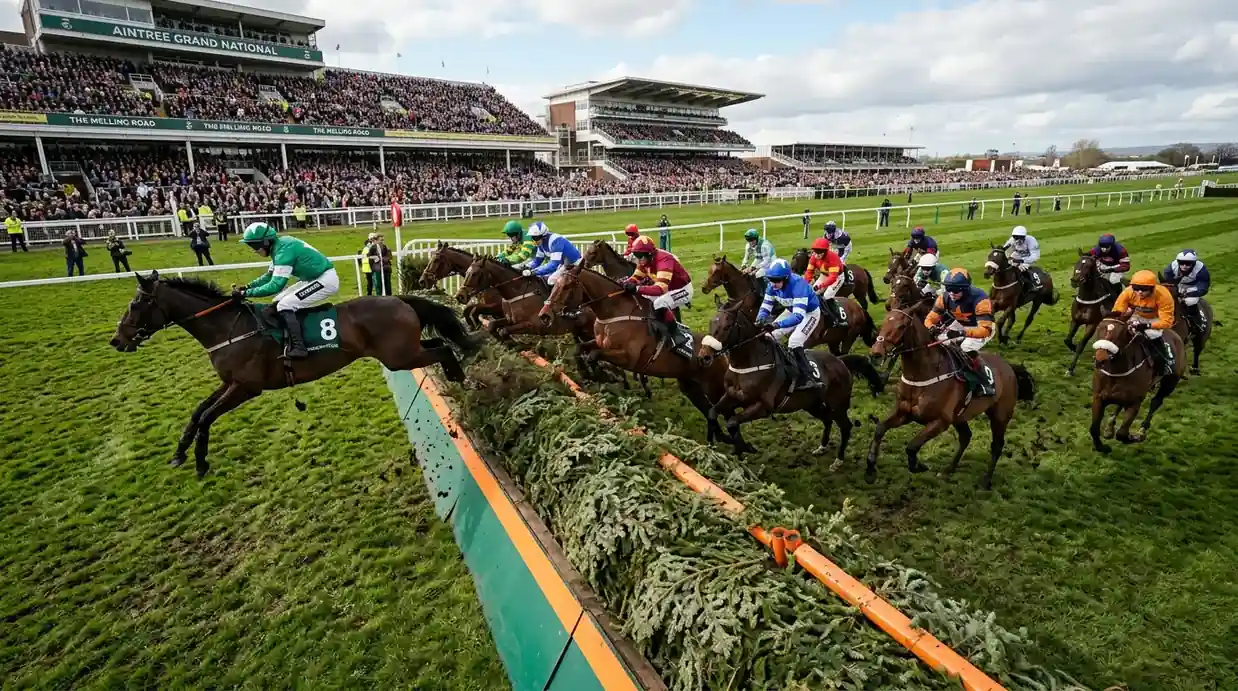
The Aintree fences are not standard steeplechase fences. They are taller, broader, and spruce-dressed in a way that produces a different jumping experience for horses. Several have characteristics that catch out the unwary — Becher’s Brook, the Canal Turn, the Chair — and the unique demands of each combine into a test that no other course really replicates. A horse that has never seen Aintree before is being asked to handle a genuinely novel challenge.
The four-mile-plus distance is also genuinely beyond what most chasers will have run. The standard chase distances are two miles, two and a half miles, three miles. Four miles two furlongs is roughly forty percent longer than a typical three-mile chase, and the stamina demands grow non-linearly. A horse comfortable at three miles isn’t automatically comfortable over four-plus. The Grand National regularly produces winners who looked one-paced at standard chase trips but who came alive once the race extended beyond what most rivals could handle.
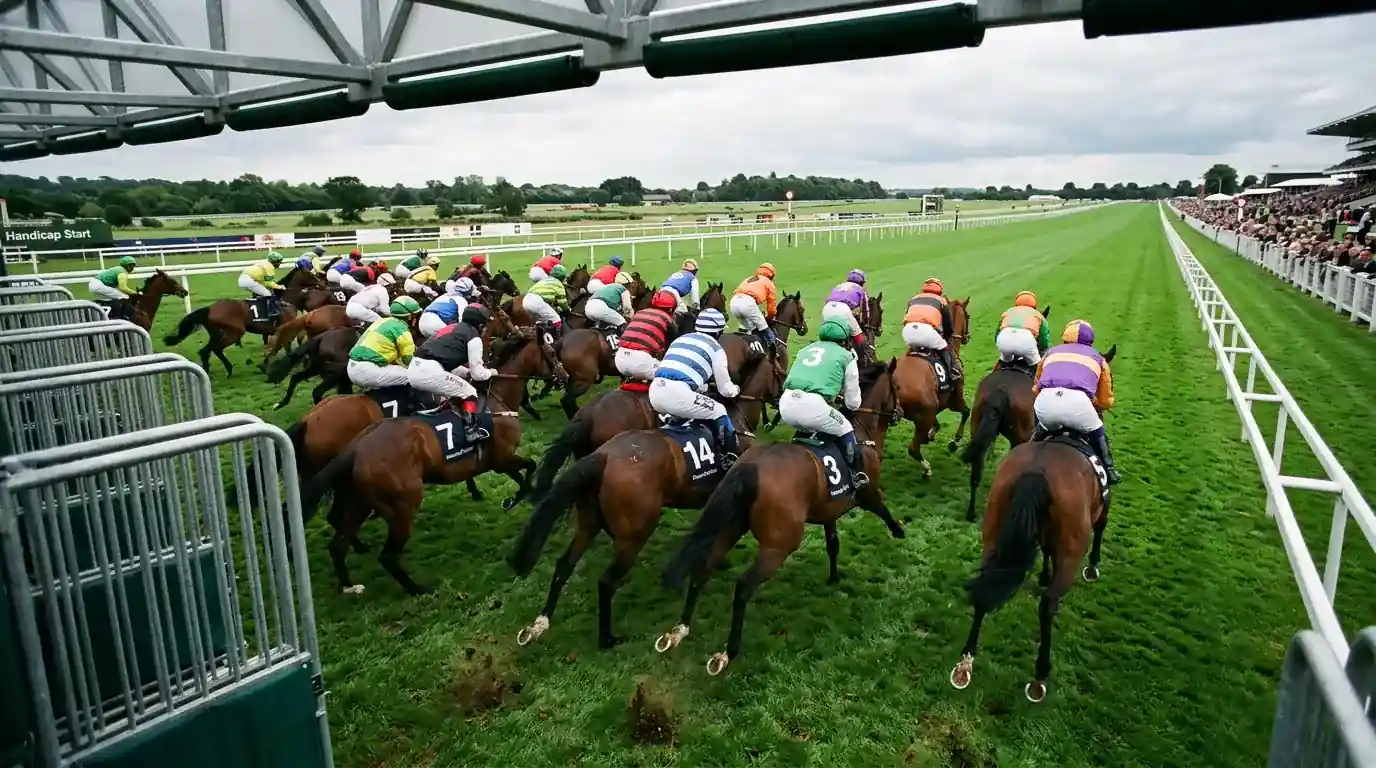
The maximum field of thirty-four (recently reduced from forty after race-day safety reviews) is another differentiator. No other UK chase carries a field this size. The traffic problems, the increased risk of being interfered with at fences, the difficulty of finding a clean run from any position — these factors create variance that statistical analysis can only partly account for. Some excellent horses lose the Grand National because the race becomes a different proposition with thirty-four rivals than with the seven or eight they’re used to.
For ante-post punters approaching the race, the long window between weights announcement and race day creates a particular pricing opportunity. The Grand National sits as one of the few UK races where ante-post markets genuinely reward patience, and the non-runner-no-bet concessions that bookmakers offer from set dates effectively transfer the participation risk away from the bettor.
Stamina indicators that actually work
Reading a horse’s stamina for Grand National purposes is different from reading it for any other race. The signals I look for first are wins or strong placings over four miles, or close to four miles, in any context. Races at Cheltenham over three miles and six furlongs, the Welsh National at Chepstow over three miles five and a half furlongs, the Eider Chase at Newcastle, the Midlands National — all serve as Grand National prep races and produce form lines that translate reasonably. Conversely, a horse whose entire profile is three-mile form is taking a leap into the unknown at Aintree.
The second indicator is how a horse finished its longest runs. A horse that won going clear over three miles six furlongs at Cheltenham is telling you something about its stamina that a horse that just hung on at the same distance isn’t. Reading the manner of past performances — not just whether they won — matters more than the bare form figures here. Race videos are useful for this. So is reading the post-race comments from jockeys and trainers in the days afterward.
The third indicator is pedigree. Grand National winners tend to come from staying jump bloodlines, often with successful jumps mares on the dam side. The pedigree-led approach isn’t infallible — surprise winners with modest breeding crop up regularly — but it’s a reasonable additional filter when other indicators are ambiguous. The most reliable stayers tend to look the part on paper as well as on the track.
The fourth indicator is age. Grand National winners cluster in a particular age range — broadly eight to eleven years old, with the modal age around nine. Very young horses are usually too inexperienced for the demands of the race; very old horses have usually lost the edge of competitive form. The age filter alone narrows the field considerably, and it’s one of the few statistical patterns that’s been remarkably consistent across decades.
Weight history of recent winners
The Grand National handicap is a deliberate compression of weights designed to give multiple horses a chance to win. Top weight is typically allotted around 11 stone 10 pounds, bottom weight around 10 stone. The narrower range than in normal handicaps means high-rated horses carry less weight relative to their ability than they would in a typical handicap, and low-rated horses carry more.
The historical record of winners under different weights tells a clear story. Most modern Grand National winners have carried somewhere between 10 stone 8 pounds and 11 stone 2 pounds. Winners carrying top weight or close to it are rare — the combination of carrying that much weight over four miles two furlongs over thirty fences is genuinely punishing, and the handicapper’s intention of equalising chances tilts the race away from horses with the heaviest burdens. Bottom-weight winners are also rare, partly because the horses with the lowest ratings are usually rated low for good reason.
The middle weight range — call it 10 stone 8 to 11 stone — is where the value historically lives. Horses carrying that kind of weight are taken seriously by the handicapper but aren’t being asked to make the kind of physical effort that top-weight imposes. A horse in that weight band with strong stamina credentials and Aintree experience is the classic Grand National profile.
Trainer patterns matter here too. Some yards prepare horses specifically for Aintree and have done so for decades. Their runners tend to be fitter for the test and to handle the build-up better than horses prepared less specifically. The yards with the strongest Grand National records aren’t necessarily the biggest yards overall — preparation specialism is a meaningful edge in this race.
Sizing stakes for the Grand National
The Grand National is the one race of the year where I genuinely believe in spreading stakes across multiple selections rather than concentrating on a single fancied runner. The variance in the race is so high — completion rates have ranged historically from roughly forty to seventy percent of the field, and many of those who complete are simply traversing the course rather than competing for prizes — that no single selection carries a high enough win probability to support concentrating stakes.
The structural answer for casual punters is multiple each-way bets across three to five selections, sized so that the total stake is what you’d normally put on a single race. Each-way works particularly well at Aintree because the race usually pays out generously on the place portion — typically the first four or five depending on the bookmaker — and the variance means that hitting the placed positions is a real prospect even when winning isn’t. For more on the place-betting maths in big fields, see my analysis of each-way mechanics.
The other staking note is to set the Grand National up as its own bankroll within your wider betting bank. Whatever you decide to allocate to the race — whether a fixed pound figure or a percentage of your annual betting budget — treat it as a self-contained event. The variance of the race is unlike anything else in the calendar, and trying to recover Grand National losses from your normal betting bankroll is a path to compounding mistakes.
Avoid the temptation to back many horses simply to “have a runner”. Backing eight or ten runners at random in the National doesn’t increase your edge; it just increases your stake and your exposure to the bookmaker’s overround. Three to five carefully selected runners, with a clear case for each based on stamina, weight and experience, is far better than a wide spread that includes horses you don’t really fancy.
Why recent form so often misleads
The Grand National is exceptionally hard to read on standard recent form because most of the form was built in races that don’t resemble Aintree. A horse that’s just won at three miles over fences at Newbury has demonstrated ability under conditions that may or may not translate to Aintree. A horse that’s just been pulled up at Cheltenham over three miles might have been unsuited to that particular race and turn out to handle Aintree perfectly. The standard reading of “win equals strong contender” and “pull-up equals weak contender” breaks down.
What matters more is the pattern of preparation. Trainers who target the Grand National typically have a horse running in one or two specific prep races, then a freshen-up of several weeks, then the National itself. Horses arriving at Aintree off a campaign that fits this pattern are usually the most credible contenders. Horses arriving off random recent runs that weren’t specifically aimed at the National often have something to prove about their preparation.
Recent injuries and absences are also harder to evaluate here than in most races. A horse that’s been off for six months looks like a layoff risk in any other context, but if the absence was deliberate preparation for the Grand National, the layoff is meaningful in a different way. Reading trainer commentary in the months before the race is essential context that the form figures alone cannot give you.
The race as a punter’s once-a-year reckoning
For most punters in the UK, the Grand National is the one race of the year where they engage seriously with horse racing at all. For serious punters, it’s the race that humbles their analytical confidence. The variance is so high, the form lines so partial, and the unique demands of Aintree so genuinely unique that even the best handicap analysts can find themselves wrong-footed.
The approach that works is preparation rather than prediction. Identify the three to five horses whose Grand National profile makes sense — stamina, age, weight band, Aintree experience, recent preparation — and back them sensibly with stakes you’ve allocated specifically for this race. Accept that you’ll be wrong more often than right. The race rewards patience over many editions, not certainty in any one.
And if your selection finishes seventh after jumping every fence, take that as a result worth respecting. Many fancied horses don’t get round at all. Completion is its own kind of achievement at Aintree, and a Grand National prepared for thoughtfully — even with a losing outcome — is a better punting experience than one approached blindly on the morning of the race.
What weight has the typical Grand National winner carried?
Most modern Grand National winners have carried between 10 stone 8 pounds and 11 stone 2 pounds. Top-weight winners (typically allotted around 11 stone 10 pounds) are rare, and so are bottom-weight winners. The middle weight band is where historical value tends to live, because it represents horses the handicapper takes seriously but isn’t punishing with an excessive burden over the four miles two furlongs.
Should I back several runners in the Grand National?
Yes — the variance in the race is high enough that backing three to five carefully chosen runners each-way usually makes more sense than concentrating stakes on a single horse. Each-way pays out generously at Aintree because most bookmakers offer extended place terms covering the first four or five home. The key is selecting horses with genuine Grand National profiles, not casting a wide net just to have multiple runners.
Why does recent form often mislead in the Grand National?
Because most form was built in races that don’t resemble Aintree. The four miles two furlongs distance is longer than almost any other UK chase, the thirty Aintree fences are unique in character, and the thirty-four-runner maximum field creates traffic problems that smaller fields don’t impose. Standard reading of recent wins and recent pull-ups breaks down. The pattern of preparation — whether a horse was specifically aimed at this race — usually matters more than what its last race result actually said.
Written by the editors at Betting Strategy for Horse Racing.